
AI news ·
CHROs Embrace AI Integration: Balancing Agentic Transformation with Human Intelligence in HR
CHROs lead AI integration with 86% prioritizing reskilling and human intelligence. Expect a 327% rise in AI use and a 30% boost in productivity soon.
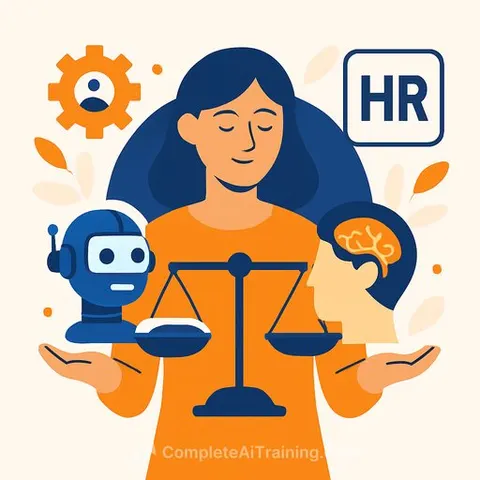
CHROs Embrace Agentic Transformation but Must Prioritize Human Intelligence
The introduction of agent technologies into the workforce marks a significant shift for HR leaders. New research from Salesforce, conducted alongside Slack, surveyed 200 Chief Human Resources Officers (CHROs) and Chief People Officers (CPOs) from organizations with over 500 employees worldwide, revealing their expectations and concerns about this change.
These HR executives are at the forefront of what’s called the agentic transformation. They’re responsible for setting the strategy around reskilling, redeployment, and hiring to adapt to the evolving workplace. The data shows that a strong majority, 86%, consider integrating AI a critical part of their role.
As Lucas Puente, Slack’s VP of Research, points out, CHROs aren’t just considering how AI will change the workforce—they’re also rethinking their own ways of working. The shift is affecting HR leadership as much as it is the broader organization.
Early Adoption and Projected Growth
Currently, about 15% of businesses report having already deployed AI technologies. This figure is expected to grow dramatically, with CHROs forecasting a 327% increase in agent adoption within two years. This signals a steep rise in AI integration, indicating a tipping point for workforce transformation.
Productivity Gains and Organizational Change
HR leaders expect a 30% increase in employee productivity, which translates to roughly an extra day and a half of output per five-day workweek. To achieve this, organizational structures will need to evolve. In fact, 77% of respondents anticipate meaningful changes to how their organizations are set up within the next two years.
Concerns about job losses are natural, but the data suggests a more nuanced picture. About 23% of surveyed CHROs plan to redeploy portions of their workforce to new, in-demand roles as AI takes over routine tasks. Meanwhile, 61% expect employees to remain in their current roles but with changes in task responsibilities—delegating repetitive tasks to AI agents while focusing on higher-value activities.
Reskilling and the Human-AI Partnership
Reskilling is a top priority, with 81% of CHROs intending to upskill their employees. There’s clear recognition that old ways of working won’t prepare teams for the future. The shift demands new skills that align with AI integration.
Recruitment will likely focus on expanding IT and R&D teams to manage and implement agentic technologies safely. After that, soft skills—often referred to as “human intelligence”—will become increasingly important. These include adaptability, collaboration, creativity, and other abilities where humans outperform AI.
Puente sums it up well: AI excels at handling repetitive, routine tasks. Human workers will need to concentrate on uniquely human skills. This balance will define future work arrangements.
AI Literacy: A Critical Skill
Understanding what to delegate to AI and what requires human judgment is becoming an essential skill. AI literacy will empower employees to work effectively alongside technology, making decisions about the best use of AI tools.
What This Means for HR
The shift toward agentic workforces is more than a technology rollout; it’s a major HR challenge and opportunity. For decades, HR leaders have sought a stronger strategic voice in their organizations. This transformation places them squarely in that role, as the success of AI adoption depends heavily on HR’s ability to manage change, reskill talent, and shape workplace culture.
Nathalie Scardino, Chief People Officer at Salesforce, highlights this moment: "There’s never been a more exciting time to be a head of HR, because you’re bringing together all of the future of work into the employee experience at a pace we haven’t seen before."
HR teams now have the chance to lead this evolution, blending technology with the irreplaceable value of human skills.
- Focus on reskilling programs that build AI literacy and soft skills.
- Prepare for organizational shifts that balance AI task delegation with human creativity.
- Expand recruitment in tech areas while nurturing collaboration and adaptability.
For HR professionals looking to deepen their understanding of AI and its impact on work, exploring targeted training can be a smart move. Relevant courses on AI tools and skills are available at Complete AI Training.