
AI news ·
College of Saint Benedict students develop artificial intelligence platform to simulate patient interactions for nursing courses
Saint Benedict students are building an AI clinical communication tool for nursing majors. This third joint project follows a prior system saving the college $20,000 annually.
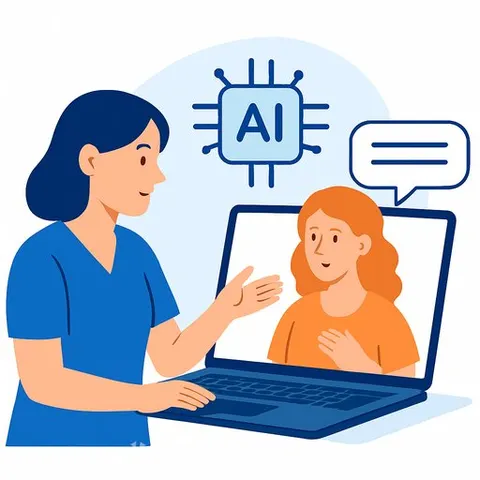
College of Saint Benedict computer science students and nursing faculty are developing a web platform that allows nursing students to practice clinical communication with AI personas. The tool addresses a core training gap by simulating real-world interactions with physicians, patients and family members, providing automated feedback on empathy and communication skills before students enter the workforce.
building conversational simulations
The project brings together juniors Ava Packer and Emily Berndt with nursing professor Dr. Jodi Berndt and computer science professor Dr. Peter Ohmann. The AI personas are built using data from Jodi Berndt's 25 years in healthcare, programmed with specific temperaments and health literacy levels. Scenarios include updating a physician, obtaining family consent, conducting admission interviews, outpatient triage and patient education.
Unlicensed nursing students face strict limits on their clinical practice. "They can update doctors as nursing students, but because they're not licensed, they can't receive orders from a provider," Jodi Berndt said. Students interact with patients and families during clinical experiences, but faculty cannot observe every interaction to provide the feedback needed to improve therapeutic communication skills. The platform solves this by generating feedback that students can share with faculty to set improvement goals.
a history of cross-department collaboration
This marks the third joint project between the nursing and computer science departments at the college. In 2020, the teams built Maestro, a barcode-scanning system replicating hospital medication administration. The software remains in use across the nursing curriculum and saves the department an estimated $20,000 annually.
The current AI tool fills a market void. "There is no product like this available to purchase," Ohmann said. The team plans to deploy the software in a graduate-level informatics course this fall before expanding it to undergraduate programs and all clinical nursing courses, including pathopharmacology.
preparing students for the workforce
The developers are testing the platform ahead of a planned presentation at the American Association of Colleges of Nursing's annual conference in Indianapolis this December. For the student developers, the work offers direct portfolio experience. "This is a project that hopefully will be used by other students here for years and years to come," Packer said. "It's a great idea, and I love being part of something I can pour my energy into - knowing that whatever I put into it will be taken out of it by thousands of others."
why this matters for education professionals
Higher education programs can replicate this cross-departmental model to solve localized training deficits. By pairing technical students with domain experts, institutions can build custom AI for Education tools that target specific pedagogical gaps without relying on expensive commercial software. Furthermore, integrating these simulations into clinical curricula demonstrates a practical application of AI for Healthcare that prioritizes hands-on skill development over theoretical instruction.