
AI news ·
Consultant urges firms to preserve human connection as AI transforms workplace
Consultant Bode Olutunbi warns businesses that prioritizing AI and remote-work efficiency over human connection risks eroding workplace culture and employee engagement.
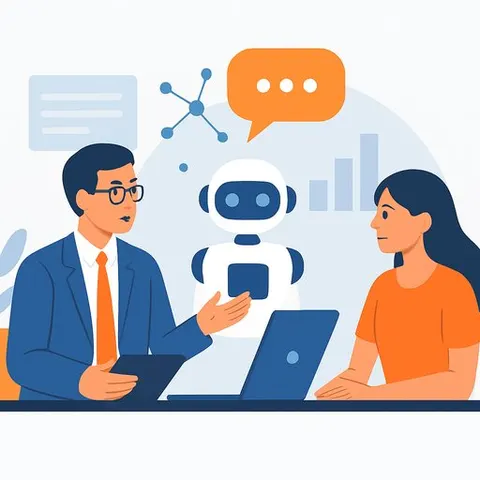
Businesses must deliberately preserve human connection as artificial intelligence and remote working transform the workplace, or risk losing their organisational identity, management consultant Bode Olutunbi has said.
Olutunbi, chief executive officer of People Source Consulting and Global Partner at Management Drives Africa, said companies focused only on productivity and technological efficiency could erode the cultural bonds that keep employees engaged. His comments come as businesses increasingly experiment with AI, remote work and hybrid arrangements.
Remote work has reduced daily interaction
Speaking on Asaase Radio's Townhall Talk on 14 August, Olutunbi said the shift to remote work has already reduced physical interaction among employees, and AI is likely to accelerate that trend. He argued that organisations need to examine why they adopt particular ways of working, not just how work can be completed faster.
"We mustn't lose our intentionality," he said.
Olutunbi acknowledged that remote work offers significant benefits, but said businesses need to find ways of maintaining relationships and workplace culture. He cited organisations where employees work remotely but are brought together at specific times to preserve human interaction.
According to him, organisations must determine which aspects of physical interaction matter to their culture and deliberately maintain them. This is particularly relevant in African societies, where interpersonal relationships and communal interaction have traditionally played an important role.
Motivation goes beyond pay
Olutunbi also argued that employee motivation extends beyond salaries. Clarity of work, psychological safety, a sense of belonging and workplace relationships can all influence whether employees are willing to contribute.
"For some individual, if there's a strong affinity in the workplace, I love it when I'm there," he said. Employees who feel secure and connected are more likely to make what he described as "discretionary contributions" to their and their organisations.
He also stressed the importance of HR leaders understanding the wider business context. HR professionals need to be credible as business leaders rather than viewed simply as specialists handling personnel matters, Olutunbi said. HR leaders must understand organisational objectives and financial realities while bringing their people management expertise to strategic decisions.
Why this matters for managers
For managers, the practical takeaway is about being explicit about what you want to preserve. When you introduce AI or extend remote plans, name the specific moments of physical or human interaction your team relies on to solve problems or build trust, and protect those deliberately.
It may be worthwhile to schedule structured time for your team to be together, even if it's only a few days a quarter, rather than letting virtual convenience quietly remove all face-to-face contact. Likewise, monitoring motivation means looking beyond salary: check whether employees know what's expected, feel safe speaking up, and report a sense of belonging.