
AI news ·
Consumer complaints about AI customer service rise, China consumers association says
China received nearly 1 million consumer complaints in the first half of 2025, with 27% tied to after-sales service and a rising share targeting AI customer support. The association reported consumers often couldn't reach humans, citing inaccurate bot responses and unfulfilled promises.
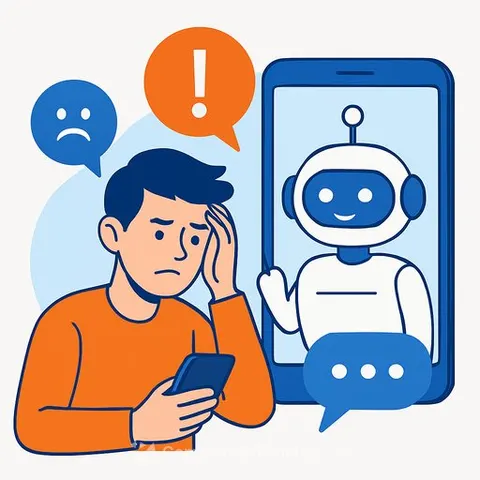
China's consumer watchdog received nearly 1 million complaints in the first half of 2025, with almost 27 percent tied to after-sales service - and a growing share of those complaints target AI-powered customer support. The China Consumers Association's mid-year report found consumers repeatedly hit walls trying to reach human agents, getting automated responses that were inaccurate or failed to deliver on promises made during the sale.
The association handled 985,928 complaints between January and June, down 1.01 percent from the same period last year. After-sales service was the most common grievance, followed by contract disputes, product quality concerns, and misleading advertising. Household electronics, clothing and footwear, food, daily necessities, and motor vehicles drew the most complaints.
When the AI is the only option
The report flagged a notable rise in complaints involving AI customer service and general-purpose AI tools. Consumers said they couldn't reach a human representative, that AI agents gave unreliable information, and that promises made by bots weren't honored later.
The association detailed three cases. In June, a consumer in Shenzhen bought the wrong regional version of a game pack on a major gaming platform. Customer service responded only with automated messages directing him to mini programs and service accounts - no human ever processed his refund request.
That same month, a woman was locked out of her home after her smart door lock failed. Her family, including a six-month-old baby, couldn't get inside despite trying passwords, keys, and even a power bank. When she called the after-sales hotline, only an AI robot answered. After waiting roughly 50 minutes, she paid for a locksmith herself.
In a third case, a consumer paid a deposit on a used car after an AI agent said the price included transfer and registration fees. At the offline transaction, a sales representative demanded an extra 1,000 yuan ($148) for the transfer. The consumer argued the conflicting information pushed him into a bad deal and asked for his deposit back.
What the law says about AI agents
The association cited existing consumer protection law requiring businesses to provide truthful, complete information about product quality, performance, intended use, and validity period, and to avoid false or misleading advertising. It urged companies to create clear, convenient paths to human agents.
AI systems can't be held legally responsible, the association said, but they are tools used by businesses - so their output is part of the service provided to consumers. It also advised consumers to verify important transaction details through official channels like company websites or hotlines rather than third-party AI systems.
Li Ya, a lawyer at Zhong Wen Law Firm, said AI can cut costs and speed up responses, but performance shouldn't be judged by response time or automated resolution rates alone. "The real test is how many consumer issues are actually resolved, how smoothly calls are escalated to human agents, and how quickly disputes are handled," Li said. "Technology can transform service delivery, but it must not undermine consumers' legitimate rights."
Li called for what he described as a "human backup system" in customer service. "AI is fine for routine questions, but it shouldn't be a dead end," he said. "We need clearer labels and limits for AI agents. Customers should always know whether they are speaking to a bot or a human."
Why this matters for customer support professionals
For people working in customer support, the report is a reminder that escalation paths are a feature, not a failure. If your company uses AI to handle first-line inquiries, the data suggests customers will judge the experience by how quickly they can reach a person when the bot can't help - not by how many tickets the bot closes. That means documenting AI limitations, keeping human handoff points visible, and making sure the information a bot gives matches what a human agent will honor later. Teams that treat AI as a filter rather than a wall will have an easier time keeping complaints out of the regulator's inbox.
For support teams building or refining these systems, practical training on AI for Customer Support can help agents work alongside automation more effectively. Supervisors may also find value in an AI Learning Path for Call Center Supervisors focused on managing hybrid human-AI workflows and escalation procedures.