
AI news ·
Continuous work redesign doubles the odds of sustaining AI-driven transformation by 2028, Gartner says
Organizations that embed continuous work redesign into their operating model will be twice as likely to sustain AI-driven transformation by 2028.
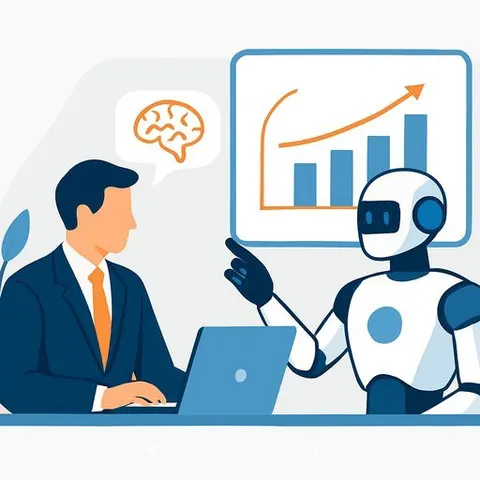
Organizations that build continuous work redesign into their operating model will be twice as likely to sustain AI-driven work transformation by 2028, according to research from Gartner. The finding arrives as companies struggle to match the speed of organizational change with the accelerating pace of AI adoption in daily workflows.
Gartner calls this capability dynamic redesign - the organizational muscle to continuously reshape workflows, decision rights, jobs, and talent deployment as AI capabilities, business priorities, and execution realities shift. The concept rejects the traditional reliance on episodic transformation initiatives, instead embedding ongoing adaptation into how the business runs every day.
Why periodic transformation falls short
Most organizations still treat work redesign as a project with a start and end date. A restructure happens, new roles get defined, and the business moves on. AI breaks that model. Tools evolve in months, not years. Customer demands shift. The org chart finalized in Q1 looks outdated by Q3.
"Due to AI, the pace of organizational change is increasingly misaligned with the speed at which work is changing," said Caroline Hewings, Sr. Director Analyst in the Gartner HR Practice. "Dynamic redesign gives organizations a repeatable way to continuously adapt workflows, decision rights and talent deployment as technology, business priorities and workforce needs evolve."
What dynamic redesign looks like in practice
The capability spans four interconnected areas. Workflows get examined and adjusted constantly, not just during annual planning cycles. Decision rights shift to match where AI handles routine judgments and where human oversight adds value. Job architectures evolve as tasks get automated, augmented, or newly created. Talent deployment follows suit - people move to where the work is, not where the old org chart put them.
HR leaders sit at the center of this shift. Building dynamic redesign requires rethinking workforce planning, learning pathways, and how performance gets measured when roles change faster than review cycles. For CHROs and senior HR executives, developing these muscles directly affects whether AI investments deliver sustained returns or stall after initial pilots. The AI Learning Path for CHROs addresses exactly this challenge - equipping HR leaders to guide continuous workforce adaptation rather than one-off change management.
The 2028 dividing line
Gartner's projection sets a clear benchmark. Organizations that treat redesign as a permanent operating discipline rather than a periodic exercise will double their odds of sustaining AI transformation through 2028. The gap between those two approaches widens as the technology cycle accelerates. Companies waiting for the next big restructure will find themselves perpetually behind.
The research points HR toward a practical shift: stop designing the perfect org chart and start building the processes that let the organization reshape itself continuously. That means different skills on HR teams, different conversations with business leaders, and different metrics for what success looks like. For professionals working in AI for Human Resources, the message is direct - the capability to redesign work in real time will separate organizations that thrive with AI from those that get stuck.
Why this matters for HR leaders
Dynamic redesign changes the HR mandate from steward of stability to architect of continuous adaptation. The practical takeaway: audit your current workforce planning cadence. If work redesign only happens around annual budgeting or a major technology implementation, your organization is already falling behind the pace of AI change. Building a repeatable, fast-cycle redesign process - and the HR team skills to run it - is the specific capability Gartner's data ties directly to sustained transformation outcomes.