
AI news ·
Cornell expands AI critical literacy program for all incoming students
Cornell University will require AI literacy training for all incoming students starting this fall, following a pilot that produced measurable gains.
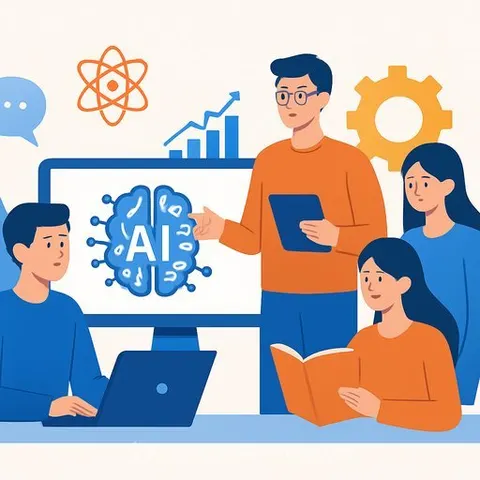
Cornell University will expand its AI Critical Literacy Program to all incoming students this fall after a pilot program showed measurable gains in understanding how large language models work and what ethical questions they raise. The program, developed by Cornell's Center for Teaching Innovation and the university library, addresses a growing need: students entering higher education must navigate AI tools that will appear in nearly every profession.
The program runs through Canvas and contains four modules: "What is Generative AI?," "Ethical Questions Surrounding Generative AI," "GenAI and Learning," and "Creating an AI Policy for Personal Use." Faculty from first-year writing, business, biology, engineering, economics, communications, and information science tested the pilot and provided feedback that shaped the expanded version.
Measurable results and student engagement
Rob Vanderlan, executive director of the Center for Teaching Innovation, said the pilot produced concrete evidence that students changed how they think about their own AI use. "We received a lot of positive feedback from students on how much they learned about a number of ethical issues they hadn't been aware of before," he said. "We also saw some really good evidence of students reflecting on their own behaviors and use of AI to benefit their learning."
Christina Sheley, associate university librarian for research, teaching and engagement, said the material is designed to reach students and faculty regardless of their background with AI. "There is a spectrum of how AI is being used, comfort levels and how personal values and ethics are shaping behavior, so we hope to address those aspects," she said. "The program is focused on general AI literacy while being attuned to students and faculty."
Faculty and field-specific relevance
The program is designed for faculty to integrate into first-year classes and advising seminars. Andrea Stevenson Won, associate professor of communication and a member of the Cornell GenAI Education Working Group, participated in the pilot and said she expects the expanded version will lead to discussions that universities need to have now.
"The program is about helping students decide whether their use of AI is actually contributing to their learning or not," she said, "but it's also designed to be built into classes as a way to foster these conversations between faculty and students."
Mark Sarvary, senior lecturer in neurobiology and behavior, said early AI literacy matters especially for students in fields where mistakes can have serious consequences. "For example, many of our students in the biological sciences are pre-health students and will use AI in their professions. These students need to become AI literate early in their academic careers, because literally, people's lives will depend on it."
Why this matters for PR and communications professionals
Higher education institutions make up a major client segment for PR and communications professionals. Cornell's shift from optional pilot to required curriculum signals how AI literacy training is standardizing, and communications teams advising universities should prepare for similar programs to roll out at other campuses - affecting how students are trained, how institutions talk about these new educational tools, and what language to use when describing them. The program's success at Cornell positions it as a potential model that other schools could adopt or adapt, which means communications strategies around university announcements, internal memos, and public launches must already account for AI education as a core offering, not an add-on.