
AI news ·
Court denies Stability AI's motion to dismiss Getty's trademark claims over AI-generated watermarks
A court denied Stability AI's bid to dismiss Getty's trademark suit over AI images with distorted watermarks. The ruling confirms AI outputs face liability for consumer confusion.
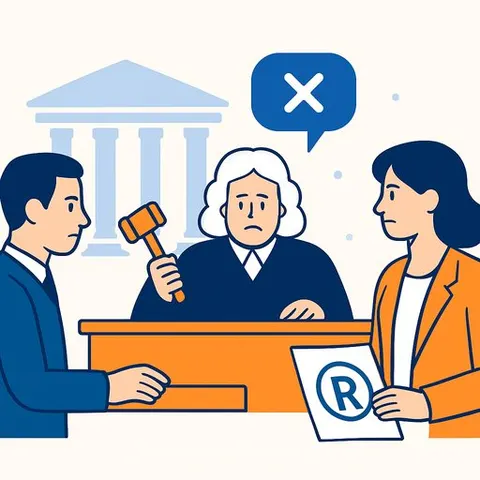
A federal court in California denied Stability AI's motion to dismiss trademark claims brought by Getty Images, confirming that generative AI outputs can face traditional trademark liability. The April 23, 2026 ruling allows Getty's Lanham Act claims-infringement, false designation of origin, and dilution-to proceed, signaling that courts will scrutinize AI-generated content for consumer confusion even when automated distortion produces watermarks.
What Getty alleged
Getty filed its complaint in August 2025 in the Northern District of California, asserting that Stability AI unlawfully copied and used millions of Getty images and associated metadata to train and commercialize its AI models. Alongside copyright claims, Getty brought trademark claims under the Lanham Act. It argued that Stability AI's outputs-which sometimes contain distorted versions of the Getty watermark-were likely to confuse consumers about the source of the image.
The court's reasoning on consumer confusion
The court found that Getty's allegations supported a reasonable inference of likely consumer confusion. It highlighted that Stability AI is a direct competitor and that users had reported encountering AI-generated images bearing distorted Getty watermarks. These facts, the ruling said, were sufficient at the pleading stage to deny the motion to dismiss the infringement claims.
False designation of origin and dilution claims advance
On false designation of origin, the court concluded that Stability AI's commercially distributed AI-generated images qualify as "goods" under the Lanham Act. The presence of distorted Getty watermarks without attribution could mislead consumers about the image's source or affiliation. The court also allowed dilution claims to proceed, finding that Getty had adequately pleaded its marks were "famous" based on decades of nationwide use, extensive advertising and media exposure, and a large global customer base.
Why this matters for legal professionals
The ruling clarifies that altering a mark through automated generation does not automatically insulate an AI company from trademark liability. Counsel advising AI developers and brand owners must now consider risks tied to training data and output quality-especially where recognizable marks might appear, even in distorted form. Staying current with such precedents is essential, and resources like AI for Legal Professionals can help practitioners track these evolving intersections of intellectual property and generative AI.