
AI news ·
Creatives vs AI: fear, reinvention and the fight for authenticity
AI is squeezing creative work - some lose gigs, others lean in with faster tools. Survival now hinges on taste, trust, and clear offers, from no-AI badges to AI-first speed.
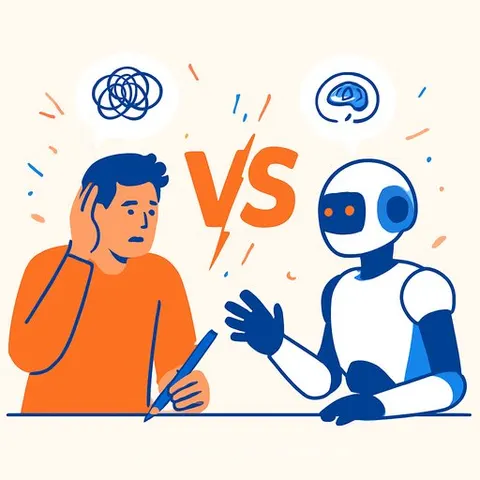
We're creatives - here's what AI has done to our jobs
AI can now spin up images, video, and convincing text in seconds. Researchers say more than two-thirds of people working in creative fields feel their job security has taken a hit. Half of novelists worry they could be replaced. That's not abstract - it's already playing out in studios, agencies, and home offices.
Art: Aisha's commissions dried up
Aisha Belarbi is a 22-year-old furry artist in Norwich. For years she made a living from commissions, blending traditional and digital techniques. Then generative tools got good - and clients realized they could type a prompt and get "something close enough."
"I really hate AI," she says. "It goes against everything I do." The line between human-made and machine-made has blurred so much that even artists struggle to tell. Aisha pivoted to writing how-to books on drawing to keep income steady. For her, art is lived experience and hours of craft - not a shortcut.
Video: JP rebuilt his business with AI
In Milton Keynes, 67-year-old videographer JP Allard saw the opening and ran toward it. He retooled his agency to produce AI ad spots and "digital twins" that present in 175 languages. Fewer shoots. Fewer reshoots. Faster delivery.
Some team members resisted and moved on. JP says the pace is the real shock: changes are hitting in months, not years. His pitch is blunt - this lowers overheads and still hits "authentic, with heart and emotion." He also believes retraining is lagging behind what clients now expect.
Music: Ross is doubling down on the human
Norwich musician Ross Stewart had a wake-up call when his mum sent over a blues album she loved. It was AI. One of dozens released by the same "artist" this year. The sheer volume is the threat: you can crank out a passable track in a minute.
For Ross, using AI to write lyrics is "sacrilege." He'll write his own, even if it takes longer. He's also seen brands swap licensed tracks for AI music, cutting off exposure and income streams for up-and-coming artists. His bet: people still crave the real thing - shows, guitars, and sweat.
Copywriting: Niki turned into the "final check"
After maternity leave, copywriter Niki Tibble returned to a market where short-form writing had been swallowed by tools. Blog posts, emails, captions - gone. Some clients still want a person to do strategy, research, and voice. Many don't.
Niki now sells a sanity-check service. She verifies sources, kills hallucinations, fixes tone, and adds the nuance machines miss. It's working for now, but she's honest about the long view: "Will my job be here in 10 years? I just don't know."
What this means for your creative career
The throughline is clear: AI compresses production time and cost. That shifts value to taste, concept, voice, and trust. Here's a practical playbook to stay paid.
1) Choose your stance - and say it out loud
- No-AI artist: Lead with process. Share sketches, timestamps, and behind-the-scenes to prove provenance. Consider content credentials and clear "human-made" labels.
- AI-assisted creative: Use tools for drafts, translation, or mockups - then finish by hand. Be upfront about it and charge for the result, not the hours.
- AI-first producer: Productize speed. Offer multilingual versions, rapid iteration, and data-backed testing. Sell outcomes, not deliverables.
2) Package services that AI can't clone
- Strategy+: Discovery, positioning, and creative direction that sets the brief for any tool.
- Final check: Fact-checking, tone alignment, legal reviews, and brand safety. Bill it as a retainer.
- Authenticity assets: Live sessions, process videos, and annotated files that build trust and fandom.
3) Update your contracts and rights
- Spell out AI usage: allowed, assisted, or prohibited.
- Define ownership, training rights, and distribution. Don't leave dataset use ambiguous.
- For likeness and voice, lock down consent and model releases.
For a high-level view of how AI intersects with IP, see the WIPO guidance on AI and IP.
4) Reprice for speed and certainty
- Anchor to value, not hours. If you deliver in a day, that's a feature - charge accordingly.
- Create "AI-assisted" and "human-only" tiers with clear differences in scope and proofing.
- Offer maintenance: monthly updates, QA, and optimization beats one-off gigs.
5) Build a portfolio that signals trust
- Show process, not just outputs. People want to see how you think.
- Label work where AI helped. Honesty beats suspicion.
- Collect testimonials that mention business outcomes, not adjectives.
6) Uplevel your skill stack
- Creative direction and taste: what to make, not how fast to make it.
- Prompt craft and model limits: know where tools fail, then fix it fast.
- Distribution: email, socials, SEO, and live performance - the "get it seen" layer.
If you want structured options by role, explore AI courses by job that map tools and workflows to everyday client work.
Quick plays for each creative
Artists
- Offer "sketch-to-finish" packages with process proof.
- Create tutorials or books as Aisha did to diversify income.
- Use clear licensing: personal, commercial, resale, and exclusivity pricing.
Videographers
- Productize AI ad variants and multilingual delivery like JP's shop.
- Keep a human-first premium tier for brand films and founder stories.
- Sell speed sprints: 24-72 hour turnarounds with testing baked in.
Musicians
- Double down on live and merch; release stems and behind-the-scenes.
- Pitch human-made tracks for ads with a "real artist" angle.
- License smart: bundles for short-form, podcast, and creator use.
Copywriters
- Lead with research, messaging frameworks, and voice guides.
- Sell audits and "final check" retainers like Niki.
- Package content systems: briefs, outlines, and distribution calendars.
The honest takeaway
AI compresses production. It doesn't invent taste, lived experience, or trust. Use that to your advantage.
Stand for something. Ship faster. Price for outcomes. And keep the human parts front and center - that's where the real demand is moving.