
AI news ·
Creativity and emotional intelligence remain a durable advantage as AI automates analytical work
AQR and Kellogg's dean argue creativity and emotional intelligence are now the most durable competitive advantages. The quant firm is doubling down on people, not just AI, as its edge.
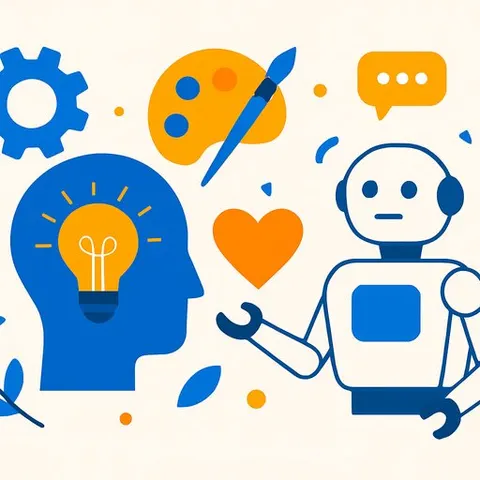
As artificial intelligence automates more analytical work, two influential voices in finance and education are making the case that creativity and emotional intelligence have become the most durable competitive advantages. Francesca Cornelli, Dean of the Kellogg School of Management, and David Kabiller, co-founder of AQR Capital Management, argue that the firms and leaders who will thrive are those who invest as heavily in human development as they do in technology.
In finance, quantitative investors have long been early adopters of new technologies, using data and models to invest more systematically than humans can alone. Yet Kabiller points to a counterintuitive move at his own firm. "At AQR, amid the AI revolution, we are doubling down on our people as our competitive edge," he said.
Why technical skills alone are no longer enough
The investment industry has competed for decades on analytical capability and technical skills. AI is making many of those capabilities easier to automate. Current tools can process information, test hypotheses, and optimize portfolios, and those abilities will only improve. The question facing every industry is what remains a differentiator once AI surpasses many of humanity's analytical and technical capabilities.
The answer from Cornelli and Kabiller is not what most would expect from a quantitative investor and a business-school dean. "Creativity and emotional intelligence," they write. "Not because these qualities are wholly immune to AI, but because in the age of AI, they are domains where people can develop a durable advantage."
These traits have always mattered, even in technical fields. Quantitative investing depends on original thinkers who can reframe an intractable problem or design a novel test. Leaders need to connect with clients, understand their problems, and translate complexity into practical solutions. Many brilliant analysts have failed as leaders not because their thinking was wrong, but because they could not bring their people along with them.
For management professionals navigating this shift, the AI for Management landscape increasingly requires pairing analytical rigor with the judgment and interpersonal skills that machines cannot replicate.
Building EQ alongside IQ
Both Kellogg and AQR have built programs to develop these capacities systematically. Kellogg created the MBAi program, a joint degree with Northwestern's McCormick School of Engineering, to bridge technical skills with leadership. Across the curriculum, students learn to read a balance sheet as well as the room.
AQR launched Quanta Academy in 2015, a professional- and personal-growth curriculum built on the conviction that a more complete human being is a better investor and colleague. The firm is now expanding the program to build the creative and interpersonal capacities that AI cannot replicate. The approach treats emotional intelligence not as an innate intangible but as a skill that can be developed, much like any technical competency.
The empathy factor
Kellogg Professor William Brady, the 2025 recipient of the Kabiller Science of Empathy Prize, researches how AI and algorithms shape human psychology. His findings suggest that AI's impact on empathy is not fixed. It depends on the choices organizations make about tool design, incentives, and culture.
For many organizations, this presents both a warning and an opportunity. The same pressures that make firms more efficient can erode the conditions that make creativity and empathy possible. Leaders who understand what motivates their people unlock something no performance system can manufacture. People do not give their best thinking to institutions that treat them as replaceable. They give it to leaders who treat them well and provide the resources to do the work better.
"In an era when retaining exceptional people is itself a competitive differentiator, the capacity to lead with empathy is paramount," Cornelli and Kabiller write.
Why this matters for management professionals
The quality of AI-enabled work will still depend on the quality of the people using the tools and fostering the culture around them. AI is only as inspired as the humans who direct it. For managers, the implication is clear: building teams that pair analytical rigor with emotional intelligence is not a soft priority. It is the hard edge of talent strategy. Firms that treat human development as seriously as technological deployment will be better positioned to attract and retain the people who produce exceptional work. For those in leadership roles, the path forward involves AI for Executives & Strategy that places as much weight on culture and connection as on tools and efficiency.