
AI news ·
CU Anschutz brings AI avatars into dental classes to train communication skills
University of Colorado Anschutz dental students now practice patient conversations with AI avatars John and Judy before treating real people. The simulations cover intake, mental health screening, and consent scenarios, with two more avatars planned for geriatric care.
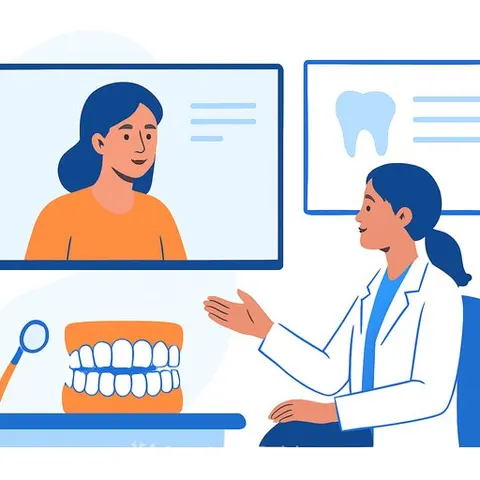
The University of Colorado (CU) Anschutz is rolling out AI-powered avatars in its dental school to help students practice patient communication before they ever treat a real person. The virtual patients, named John and Judy, are now part of courses including "Assessment of the Dental Patient" and "Who Can Consent? Navigating Guardianship and Power of Attorney in Geriatric Dental Care."
The avatars grew out of CU's Dental Advanced Simulation Hub and simulate routine interactions like patient intake and mental health screening. The goal is to give students structured, low-risk practice early in their training - the kind of repetition that builds skill without the stakes of a live patient.
Teaching students to ask better questions
The scenarios are designed to mirror real-world messiness. In one case, a patient doesn't fully disclose their medical history, forcing students to probe and follow up until they get the complete picture. It's a deliberate test of clinical questioning, not just recall.
"We're not just simulating patients - we're simulating how patients actually behave," said Clint Carlson, MS, the developer of the avatars and director of education technology innovations for the CU Office of Medical Education and CU Anschutz Dental. "Patients don't always know what's relevant to share. We're teaching students how to uncover the full story."
Three other avatars - Jessica, Greg, and Shawn - guide students through mental health screenings and emotionally sensitive conversations. These exercises focus on empathy and clarity when the topic gets difficult.
What's next for the simulation program
The university plans to add avatars named George and Linda, who will simulate an older patient arriving with a caregiver. That scenario models a common real-world situation where the patient's ability to communicate is limited and a family member or aide is part of the conversation.
Carlson is also exploring augmented reality in simulated operatories, plus real-time language translation and adaptive scenarios. "We're moving toward a world where these avatars are in the room with you," he said. "This is about experiential training - learning by doing, anytime and anywhere."
For educators, the takeaway is that AI simulation is becoming a practical tool for teaching soft skills that are hard to assess in a lecture hall. The same approach used here - practicing difficult conversations in a low-stakes environment - applies beyond dentistry, from medical intake to client-facing roles in any field. That's part of a broader shift in AI for Education, where the technology moves from content delivery to interactive skills training. Instructors looking to build similar exercises can find practical methods in AI for Teachers training.
Why this matters for education professionals
This program is a working example of AI being used to teach interpersonal skills, not just technical ones. For educators, the lesson is that simulation tools can create repeatable, measurable practice opportunities that would otherwise require hours of faculty time or real patients. The model is portable: any program that trains people to handle sensitive conversations - healthcare, social work, law, customer service - could adapt this approach. The key is designing scenarios that expose what students don't know, rather than simply confirming what they do.