
AI news ·
Decoding the Black Box: Unraveling the Mysteries of Advanced AI and Language Models
Advanced AI systems often act as black boxes, hiding their inner workings. New research and neuroscience-inspired tools are making these models more transparent and trustworthy.
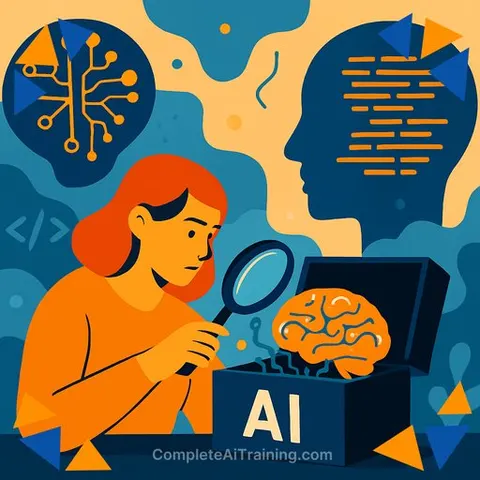
BLACK BOX: The Hidden Workings of Advanced AI Systems
Artificial intelligence systems, especially the most advanced ones, often operate as black boxes. Their internal processes remain largely inscrutable, even to experts. However, recent research and new techniques suggest this opacity might not last much longer.
Natural Language Processing and the Transformer Revolution
The field of natural language processing (NLP) long struggled to make sense of human language in a way machines could handle effectively. This changed with the introduction of the transformer architecture, which reshaped the landscape of language models. The transformer enabled AI systems to process and generate human-like text with unprecedented fluency.
If you're interested in exploring how transformers and related technologies are evolving, consider checking out latest AI courses that focus on these advancements.
Neural Networks: Mapping AI’s Ability to Identify Objects
Neural networks form the backbone of modern AI. They work by processing data across thousands of dimensions, learning patterns that allow them to perform tasks such as identifying a cat in an image. Visualizing these processes makes it easier to grasp how AI interprets complex data.
Understanding neural networks is essential for anyone involved in AI research or application. A simple conceptual map combined with real examples clarifies how these systems function under the hood.
Why Language Models Are Difficult to Interpret
Language models are notoriously hard to analyze. Researchers are borrowing methods from neuroscience to study how these models process language, revealing just how puzzling their internal operations can be. This ongoing work aims to make AI systems more transparent and trustworthy.
- Black Box Nature: AI models often make decisions through layers of computation that defy straightforward explanation.
- Interpretability Techniques: Tools inspired by brain science help expose the hidden mechanisms inside language models.
- Practical Implications: Better interpretability enhances model safety and reliability, crucial for scientific and industrial applications.
For professionals in science and research, keeping up with these developments is critical. Resources like skill-based AI courses can provide valuable insights and practical knowledge.
The field continues to evolve, with progress steadily chipping away at the black box barrier. This promises more transparent AI systems that scientists can both trust and improve upon.