
AI news ·
Delhi Schools Launch AI Literacy Curriculum for Classes 6 to 10 with Ethical and Multilingual Focus
Starting May 8, 2025, Delhi schools will teach AI literacy to Classes 6-10, focusing on digital awareness, critical thinking, and ethics. The curriculum is accessible in multiple languages with teacher support.
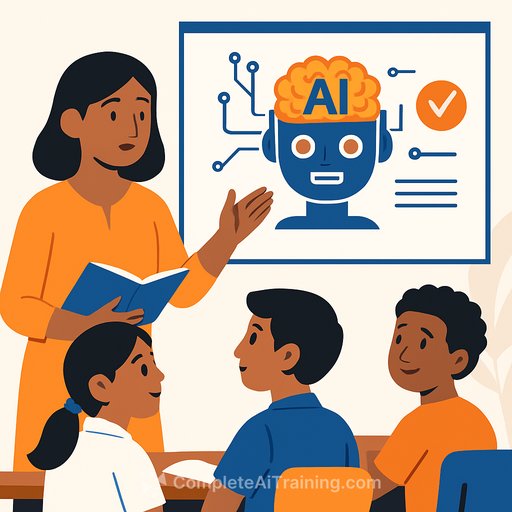
Delhi Schools Launch AI Literacy Curriculum for Classes 6 to 10
Starting May 8, 2025, Delhi schools will introduce an Artificial Intelligence (AI) literacy curriculum for students in Classes 6 to 10. Targeted at 11 to 14-year-olds, this new programme aims to build digital awareness, critical thinking, and a strong ethical foundation around AI technologies.
Curriculum Overview
The curriculum has been developed collaboratively by the Central Square Foundation (CSF) and the Wadhwani School of Data Science and AI at IIT Madras. It represents one of the first structured efforts in India to embed AI education within mainstream schooling, focusing on age-appropriate content that simplifies AI concepts.
Students will learn how AI works, where it is applied, and how to interact with it responsibly. The approach moves away from rote memorisation and emphasizes critical thinking and practical skills.
Language and Accessibility
To ensure accessibility, the curriculum will initially be available in Hindi, Marathi, Bengali, Odia, and English. Additional languages will be added in future phases. Within six months of launch, content and teacher training modules will also be available online. This digital access removes physical barriers and supports remote learning.
Teacher Support and Flexibility
Teachers will receive training and ongoing support, regardless of their prior experience with technology. Schools can adapt the curriculum to fit their local context and student needs, enabling flexible implementation.
Ethical Focus
Ethical issues are a key part of the curriculum. Topics include algorithmic bias, data privacy, accountability for AI-driven decisions, and the broader societal impact of AI. This ensures students develop not just technical skills but also a sense of responsibility when interacting with AI.
Addressing Varied Digital Experience
The curriculum is designed to accommodate different levels of digital exposure among students and teachers. Multiple entry points allow learners with varying familiarity to engage with the material effectively.
Setting a Precedent
Delhi’s introduction of AI education in schools sets an example for other states. As technology becomes a routine part of life, education systems must equip students with both knowledge and ethical awareness about AI.
For educators interested in expanding their AI teaching skills, exploring latest AI courses can be a valuable step.