
AI news ·
Deputy Minister Stresses Rigorous Testing and Regulation Before AI Integration in Healthcare Sector
Deputy Minister Nezar Patria urges rigorous testing before AI adoption in healthcare to ensure safety and ethical use. Human oversight remains essential to manage risks.
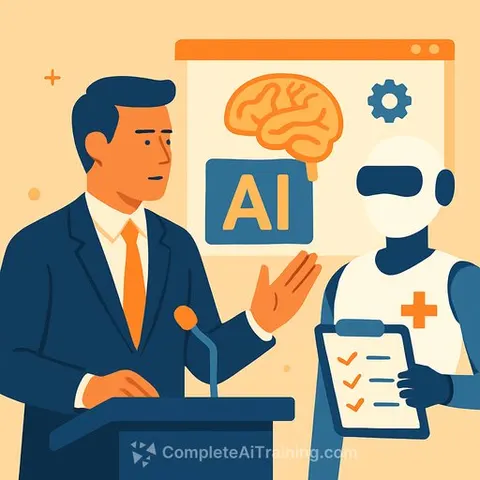
Deputy Minister Calls for Rigorous Testing Before AI Adoption in Healthcare
The Deputy Minister of Communications and Digital, Nezar Patria, has emphasized the need for comprehensive testing prior to integrating artificial intelligence (AI) into healthcare. His statement, made in Jakarta on May 4, 2025, highlights the importance of careful evaluation to prevent errors and ensure safety in AI applications within the health sector.
Nezar pointed out that AI systems must undergo detailed development and monitoring processes before being deployed. This approach helps verify regulatory compliance, assess risk mitigation, and confirm that AI solutions are appropriate for their intended medical use cases.
AI’s Decision-Making Ability Raises Concerns
Current AI technology can make autonomous decisions, which presents unique challenges in healthcare. Nezar explained the risks associated with AI’s decision-making, including potential technical issues and ethical dilemmas. He stressed that AI should complement, not replace, human judgment in clinical settings.
“AI in the health sector faces significant challenges such as misinformation and biases influenced by commercial interests,” Nezar said. He also warned about medical recommendations generated by AI that might not have undergone proper clinical trials, posing risks to patient safety.
Government Strategy and Regulatory Efforts
Indonesia is actively pursuing digital transformation in healthcare. The Blueprint for Digital Health Transformation Strategy 2024 outlines key initiatives like integrating health data, expanding electronic health records, and boosting telemedicine services. AI is expected to assist in areas such as data management, drug development, diagnostics, and treatment planning.
However, challenges remain. Issues like AI malpractice and unclear legal frameworks could undermine trust and safety. To address these, the government is preparing a Presidential Regulation (Perpres) aimed at formalizing AI governance with a focus on ethical and inclusive implementation.
Balancing AI and Human Expertise
The health sector requires a balanced approach where AI supports healthcare professionals rather than replaces them. Human oversight remains critical to interpret AI outputs, ensure accuracy, and uphold ethical standards.
For healthcare professionals interested in understanding AI applications and their implications further, exploring specialized training can provide practical insights. Resources such as Complete AI Training offer courses tailored to different skill levels and job roles in AI technology.
- Ensure AI systems undergo thorough testing before clinical use
- Maintain human oversight to manage risks and ethical concerns
- Support government efforts to establish clear AI regulations in healthcare
As AI continues to evolve, healthcare providers must stay informed and cautious, aiming to integrate technology safely while prioritizing patient welfare.