
AI news ·
Designers push back against generic AI-generated flyers
AI-generated flyers are flooding high streets with generic, statistically averaged visuals, and designers say the sameness hurts small businesses trying to stand out. The backlash is pushing some owners back to hand-crafted work, creating fresh demand for human designers who can prove their value.
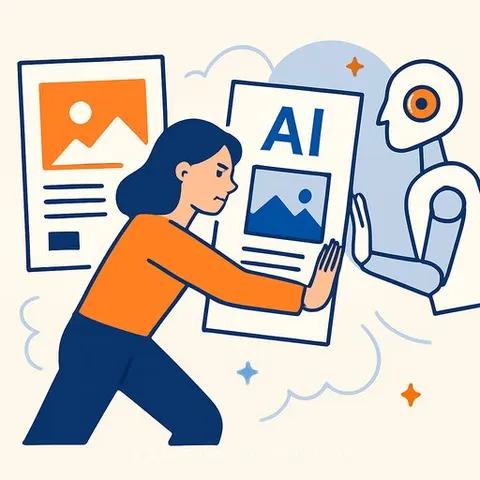
Walk down any high street and you'll see it: church bake sales, food trucks, and local repair shops all advertising with the same glossy, slightly-off AI-generated imagery. The flyers are everywhere, and they're replacing the folk design tradition that once produced charmingly bad Photoshop collages and hand-drawn signs. The result, according to a growing chorus of graphic designers, is a wave of generic visuals that could actually hurt the businesses using them.
Designers are fighting back on Instagram and YouTube, posting side-by-side comparisons of AI flyers versus their own hand-crafted alternatives. Some are treating the worst AI examples as practice briefs, showing how a professional would approach the same project. Others are simply pleading with small businesses to try anything else - even pen and paper.
The generic look is the problem
The core complaint isn't that AI tools exist. It's that AI image generators, even with carefully written prompts, tend to produce a statistical average of everything they've been trained on. That's why so many AI flyers share the same color palettes, the same typography, and the same oddly proportioned food photography.
"Even with the most detailed 1,000-word prompt followed by multiple rounds of generations, there's an inherent tendency for AI image generation to gravitate to a statistical average of its data set and the verdicts of data annotators."
Before AI, amateur design had personality. Bad Photoshop fails were at least memorable. Now, as one observer put it, "everything just looks a bit mid." For businesses trying to stand out in a crowded local market, that's a real risk.
The hand-crafted counter-trend
Some businesses appear to be getting the message. A parallel trend is emerging on Instagram, with small businesses declaring they'll communicate using pen and paper instead of AI flyers. Others are sharing simple tutorials on how to make a flyer without AI tools.
For creatives watching this unfold, the moment offers a clear opportunity. The backlash against generic AI design is creating demand for work that feels human - and for professionals who can deliver it. If you're a designer or illustrator, this is a chance to position your skills against the flood of sameness. AI design courses can help you understand the tools well enough to explain why your approach differs, while AI for creatives resources can help you navigate the ethical questions clients are starting to ask.
Why this matters for creatives
This isn't just a debate about aesthetics. It's a shift in how small businesses think about design - and who they'll pay for it. If the backlash continues, clients who once considered AI a free replacement for designers may start coming back, looking for work that actually reflects their brand. The designers who can articulate why their process produces better results - and who can show it - will be the ones who benefit.