
AI news ·
Digital artists fight the 'AI look' with rough edges and visible brushwork
Digital artists are adding visible imperfections and rough edges to their work to prove it wasn't made by AI. The shift responds to viewers who increasingly assume polished images are machine-generated, threatening artists' credibility and trust.
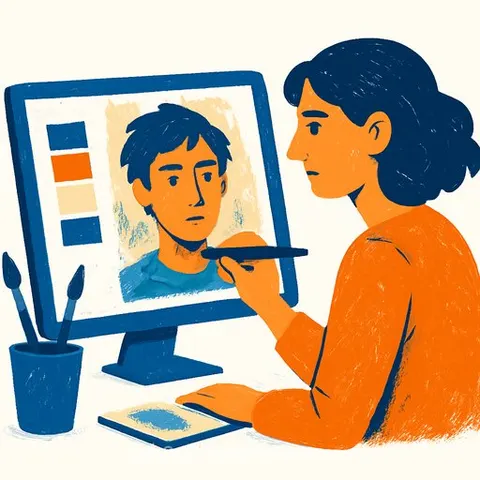
Digital artists are deliberately adding rough edges, visible brush marks, and wobble back into their work to distinguish themselves from AI-generated images. The shift responds to a growing problem: viewers increasingly can't tell whether a polished digital image was made by a human or a machine.
Artists who work with highly refined images now face a credibility problem, according to Creative Bloq. When audiences assume a flawless piece was generated by AI, the work loses the authority and trust that comes from human authorship.
Signals of human touch
One idea gaining traction among digital artists is to stop polishing every image to perfection. Artists are not abandoning digital software; instead, they are changing what they ask it to do. In apps like Fresco and Rebelle, brushes and effects that resemble traditional media are gaining more popularity.
Tactics include assembling a personal bank of scanned or photographed textures and dialing back line smoothing. When viewers are more skeptical about whether an image is real, traces of how it was made can add to the work's appeal.
Artists have long tried to remove inconsistencies to make work look polished. Now, those same features are being used to signal authorship and trust. For creatives looking to understand the technical side of this shift, Generative Art Courses offer a way to study how AI tools produce their distinctive look - and how to work against it.
Trust and the AI question
The shift is part of a larger conversation about how AI belongs in creative work. The visibility of AI-generated content affects what people see online and how creative workers protect their livelihoods in a rapidly changing economy. It's also affecting people's trust in the validity of what they see around themselves.
None of this means every polished piece was made by AI. But while other forms of technology have shaped the creation of art before, AI is clearly pushing many people toward creating art that is human-centered.
Many artists have developed their styles through years of practice, and some are now adjusting their approach again to keep the work recognizably human. For creatives navigating this moment, AI for Creatives provides a starting point for understanding how these tools work - and how to build on your own methods.
Why this matters for creatives
Your audience is more skeptical than ever about what they're looking at. Leaving traces of your process - imperfect lines, layered textures, visible brushwork - isn't a step backward. It's a way of proving the work is yours, and it's a signal that can build trust with viewers who are tired of guessing.