
AI news ·
Digital science connects AI agents to global research database with new MCP servers
Digital Science launched MCP servers for its Dimensions database, giving AI agents access to 430 million research records. R&D teams can now pull live, verified data across publications, grants, and patents without custom integration.
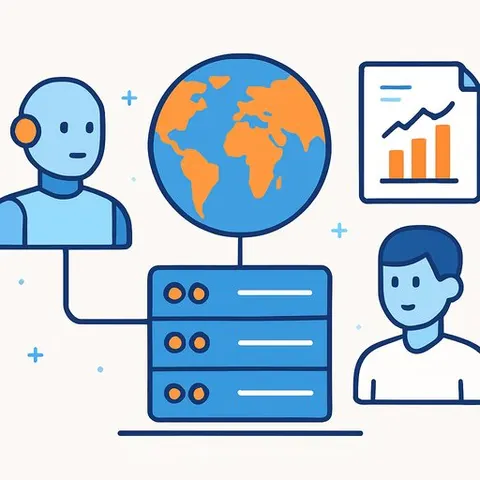
Digital Science has launched Model Context Protocol (MCP) servers for its Dimensions research database, giving enterprise AI agents direct access to more than 430 million interconnected research records spanning publications, grants, patents, clinical trials, datasets, and policy documents. For R&D teams in pharma, biotech, and competitive intelligence, this means AI assistants can now pull live, verified research data without custom integration work.
The company built two purpose-specific integrations. The first, Dimensions Semantic Search MCP, uses concept-aware search across 40-plus life science domains. Instead of matching keywords, it identifies scientific meaning using domain ontologies. The second, Dimensions Analytics MCP, connects AI agents to the full breadth of Dimensions content for landscape analysis, funding intelligence, and organizational profiling.
How the integrations work
The semantic search server is designed for the complexity of life science terminology. A traditional keyword search for "PFAS" finds only documents containing that exact term. Semantic search identifies the underlying scientific concept and recognizes related substances like PFOS, PFOA, and PFHxS through domain ontologies. It surfaces evidence across drug classes, disease subtypes, and compound families automatically, and searches publications, patents, clinical trials, and drug labels in a single interface.
The analytics MCP lets AI agents map competitive research landscapes across any therapeutic area, geography, or technology domain. It profiles organizations and investigators by aggregating publications, grants, and funding relationships automatically. The server can track funding trends across topics or institutions and link research outputs, people, organizations, and funding sources without manually consulting multiple databases.
The problem these servers address
Enterprise R&D teams face a persistent problem: their AI agents typically draw on general-purpose training data that may be months or years out of date, lacks peer-reviewed depth, and cannot always be verified. Without access to verified structured data, agents may generate responses that sound authoritative but have no reliable source. The new servers connect to live, structured Dimensions data through the MCP standard, which works with every major AI platform including Claude, ChatGPT, and Gemini.
Existing Dimensions API customers can connect immediately with no additional license required.
Sebastian Schmidt, EVP Enterprise at Digital Science, said: "Whether a team is mapping the competitive landscape, identifying technology transfer opportunities, tracking IP developments, or scanning the horizon for emerging research trends, their AI agents can now draw on lived, structured data from Dimensions."
Peter Haase, VP Knowledge Graph Technologies at Digital Science, said: "Rather than relying on users to anticipate every relevant term, abbreviation, or naming variation, the system searches at the level of meaning represented by the ontology. For teams involved in drug discovery, medical affairs, biotechnology, or regulatory intelligence, that difference is significant. It enables researchers to find scientific evidence based on concepts rather than keywords, bringing search closer to the way domain experts think about a subject."
Why this matters for science and research professionals
For working scientists and analysts, the practical change is that they no longer need to manually aggregate data from fragmented sources or rely on AI assistants trained on outdated web data. A researcher can say something like "show me all the funded clinical trials involving CAR-T therapy in solid tumors since 2023" and get a answer that pulls from relevant, current records across multiple Dimensions databases. The semantic search layer also reduces the risk of missing relevant literature because the user did not know to type the specific abbreviation or synonym a study used. AI for Science & Research tools like these are shifting the burden of verification from the user to the data infrastructure. And with MCP as the integration standard, these connections work across multiple AI platforms without custom development for each one.