
AI news ·
Dispatchly launches voice AI platform for home service contractors
Dispatchly launched an AI-native platform that replaces separate CRMs, schedulers, and billing tools with a single voice-operated interface. Contractors can speak a request to generate an estimate and dispatch a technician without touching a screen.
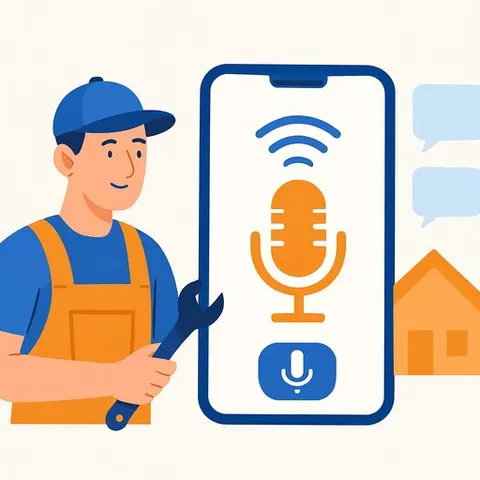
Dispatchly released an AI-native business management platform that consolidates the fragmented software home service contractors rely on daily. The system replaces separate CRMs, scheduling applications, billing platforms, and marketing tools with a centralized interface operated through natural voice commands, letting contractors manage operations from the field without touching a screen.
How the voice-first platform works
The platform uses conversational AI to interpret and execute multi-step tasks from a single spoken request. A contractor can photograph a job site and tell the system to create an estimate, send it to the customer, and set a follow-up reminder. Dispatchly builds the Photo Estimate and runs the full workflow without the user navigating menus or switching between applications.
"The home service industry has plenty of software, but the tools operate in isolation," said Burak, Co-founder of Dispatchly. "Contractors end up working a second shift at night just to update systems. We built Dispatchly so a simple spoken request can automatically reorganize a schedule, generate a professional estimate, or dispatch a technician."
Cutting the administrative second shift
Home service businesses typically stitch together multiple platforms for daily operations. Manual data entry across disconnected tools leads to delayed estimates, scheduling errors, and revenue leakage. Dispatchly consolidates these workflows so a contractor can manage scheduling, billing, and customer communication without returning to a desk. The voice-command structure extends to marketing: an owner can verbally instruct the system to send targeted campaigns-such as seasonal maintenance offers for dormant accounts-without manually exporting customer lists or building campaigns in a separate tool.
"Business software assumes the user is sitting at a desk, which is impractical for contractors moving between emergency calls and job sites," added David, Co-founder of Dispatchly. "Our goal is to let home service owners manage their business as naturally as they would speak to an experienced employee."
Why this matters for operations professionals
For operations leads in field-service businesses, tool fragmentation creates a compounding cost: every manual handoff between systems is a chance for data loss, scheduling conflict, or billing delay. A voice-operated platform that consolidates CRM, scheduling, billing, and marketing into a single workflow reduces those failure points. The approach mirrors broader trends in AI for Operations, where conversational interfaces are starting to replace dashboard-heavy software for mobile workforces. AI for Operations Managers training increasingly focuses on evaluating platforms that cut administrative overhead without adding interface complexity-exactly the problem Dispatchly targets.