
AI news ·
Editor-in-chief urges readers to hold on to human creativity as AI image use grows
AI image generation is spreading fake fashion photos, but a Georgetown study of 370,000 essays found bot-written work contained 8x fewer new ideas. The real risk isn't just bad output-it's losing original judgment and the creative edge that separates you from a machine.
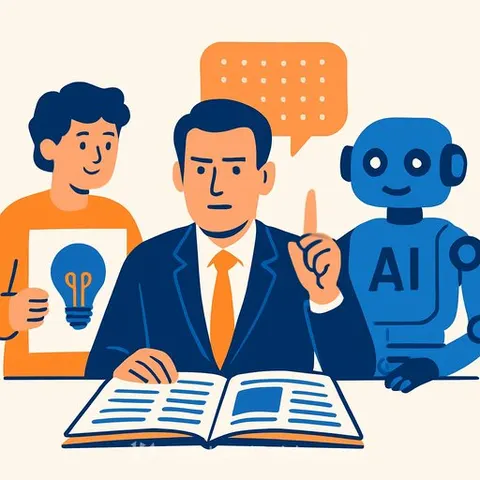
For years, fashion brands have used photo editing to clean up behind-the-scenes messes like sandbags and clamps. Now some are skipping the photo shoot entirely, using AI to generate images of clothes they never actually photographed - and in some cases, never made. The backlash on social media has been fast and loud, but the deeper issue isn't fake fashion photos. It's what happens when creative professionals outsource the core of their work to a machine.
Georgetown University neuroscientist Dr. Adam Green and his team have spent eight years reviewing essays from more than 370,000 students. After the onset of ChatGPT, the researchers noticed a shift: student work became technically polished but lacked truly creative ideas, leaning instead on common constructs. The essay that didn't use bots contained eight times more new ideas. "AI is making us all sound the same, separating our original thoughts and personality from our creative efforts," writes our editor-in-chief.
The creative instinct is the human one
The fashion industry's AI experiment illustrates the problem. Brands are using AI to create images of clothes based on real pieces, but the fabric's drape and fit on an actual body will never match the generated image. The models have seven fingers. The locations don't exist. It's uncanny valley, not aspiration.
The editor decided to address these concerns directly, admitting that even the most polished magazine spreads involve human decisions - forecasting trends, styling looks, scouting locations, shooting images and designing layouts. What makes that work is actual editorial judgment. AI-generated images have no judgment. They're just content, sanitized and generative art stripped of perspective.
Where AI helps and where it gets in the way
The editor is not arguing for a total AI ban. AI can support the process, like removing leftover sandbags from a photo, and it has already proven itself for practical tasks like navigation. The problem is when it becomes the editor of creative thought.
Get to the core of what we do: We think. We judge. We make choices about what to include and where to place it. When E tool takes over that process, it's a replacement, not a support.
For creative professionals, resource is AI for Creatives best used on technical craft - cleanup, formatting, speed - not as a thought partner. The distinction matters because the ideas that fuel original work disappear when AI runs the whole process.
Why this matters for creatives
If your work depends on original thinking, an AI that standardizes everything is a professional threat. If you're a designer, marketer, museum educator, composer or writer, your value is in ideas that haven't already been seen on the trends page. AI can't see what the world lacks. Your job is to figure that out and fill the gap.
The risk is practical, not philosophical. If you produce work that looks like everyone else's, you don't need a human. You need an API. The goal is the opposite: make yourself the most human thing about your work. Let AI tighten the grammar. Keep the thought process yours.
That means building habits that counter the generic pull. Daydream on purpose. Pay attention to the physical world instead of the feed. Pursue questions and projects you don't know how to solve yet - and let the failure of "perfect" outputs be part of the work. Accept that some things are worth doing slowly, and without a default bot in the middle of the process.
In the end, there's nothing wrong with AI as a tool. As a substitute for human judgment, it's a dead end. The work that lasts is the work that starts with a point of view. You lose that, and you lose the one edge you have over a machine.