
AI news ·
Educators and Developers Clash Over AI Harms in K-12 Classrooms, Cornell Research Reveals
Developers focus on technical AI issues, while educators worry about impacts on critical thinking, equity, and workload. Bridging this gap is key for effective AI in classrooms.
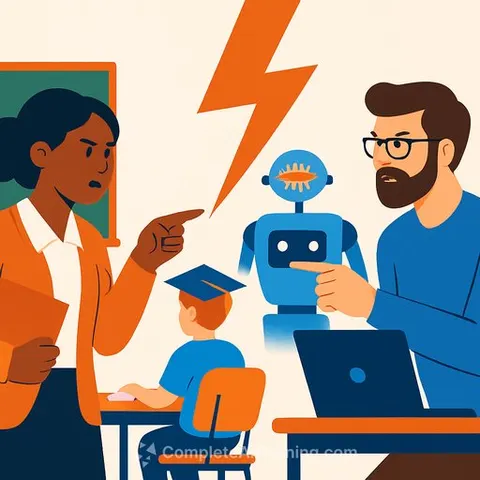
Developers and Educators Differ on Potential Harms of AI in Education
Educational tools powered by large language models (LLMs) like ChatGPT are increasingly common in K-12 classrooms worldwide. These tools aid in lesson planning, personalized tutoring, and more. However, recent research reveals that the developers creating these tools and the educators using them have distinct perspectives on the potential harms they pose.
This disconnect highlights the need for educators to have a stronger voice in the development process of AI-driven educational technologies.
Contrasting Views on AI Harms in Education
Developers tend to concentrate on technical challenges such as reducing hallucinations, preventing privacy breaches, and filtering toxic content generated by LLMs. Their focus is on improving the accuracy and safety of the technology itself.
Educators, on the other hand, are more concerned about broader sociotechnical impacts. These include risks like diminished critical thinking skills among students, negative effects on social development, increased teacher workload, and the possibility of widening educational inequalities. For instance, schools in disadvantaged districts may struggle to afford licenses for these tools, potentially shifting budgets away from other vital resources.
Many educators expressed that they know how to work around technical limitations but worry more about how AI tools influence learning quality and equity.
Examples of Educator Concerns
- Students become less inclined to engage in critical thinking because they can easily request answers from AI.
- Access to AI tools is uneven, often favoring schools with more funding and leaving others behind.
- The additional workload on educators to monitor and integrate AI tools effectively can be substantial.
Recommendations for Educator-Centered AI Development
To bridge the gap between developers and educators, the research proposes four key actions:
- Design AI tools that empower educators to question and correct AI outputs actively.
- Establish centralized, clear, and independent reviews by regulators to evaluate AI educational technologies.
- Make AI tools more customizable to better suit educators' diverse needs and teaching styles.
- Prioritize educator input when school districts decide whether to adopt AI tools.
Additionally, educators who opt out of using AI tools should not face penalties, acknowledging their professional judgment and concerns.
Balancing Technical and Social Considerations
While reducing hallucinations and technical errors remains important, designing tools that allow teachers to intervene and correct misinformation can free educators to focus on addressing broader educational harms. This approach supports better integration of AI in classrooms without compromising teaching quality.
Fostering ongoing dialogue between AI developers and educators is crucial. Recognizing and preparing for the social and societal impacts of LLMs in education requires expanding research beyond technical metrics to include these higher-stakes concerns.
Further Reading
For those interested in the detailed study, the paper 'Don't Forget the Teachers': Towards an Educator-Centered Understanding of Harms from Large Language Models in Education was awarded Best Paper at the 2025 CHI Conference on Human Factors in Computing Systems.
Those seeking to deepen their knowledge of AI applications and challenges can explore additional resources and courses on Complete AI Training.