
AI news ·
Expert says AI in government needs citizen collaboration to build trust
Disclosing AI use isn't enough to build public trust, says researcher Mila Gascó-Hernandez. Governments must make systems understandable and explainable, and involve citizens in design from the start.
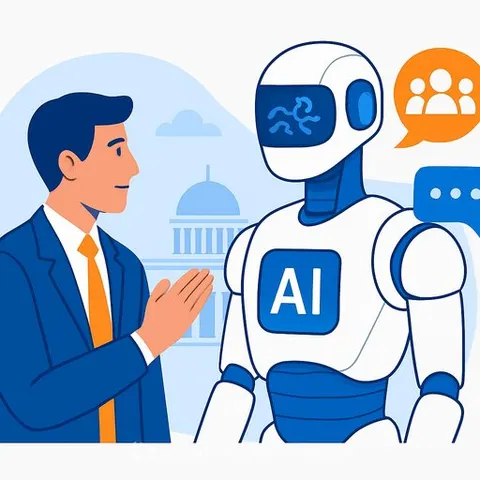
Governments are under growing pressure to adopt AI, but public trust remains the sticking point. Mila Gascó-Hernandez, research director at the Center for Technology in Government and an associate professor at Rockefeller College, says transparency alone won't solve the problem.
Speaking at the American Society of Public Administration conference, Gascó-Hernandez pointed to emerging research showing that citizens generally accept AI in government when it improves public services. The trouble starts when AI-informed decisions hurt individuals. In those cases, simply telling people an algorithm was involved doesn't restore confidence.
Beyond disclosure: understandability and explainability
Gascó-Hernandez argues that governments need to go further than basic disclosure. AI systems should be understandable, meaning citizens can grasp at a basic level what AI is and how it's being used. They also need to be explainable, meaning government staff can clearly justify outcomes produced or supported by these systems.
"Trust can be undermined when AI-informed decisions negatively affect individuals," she said. "Simply disclosing that AI is being used may not be enough to mitigate distrust or reassure citizens that decisions are fair and just."
The missing piece: citizen participation
International and governmental organizations have developed ethical AI governance frameworks in recent years, many of which call for including stakeholders from across sectors and disciplines. Industry and academia are already at the table. Citizens are not.
Gascó-Hernandez said research consistently shows that co-production and collaborative governance can strengthen public trust. She argues that participatory approaches should be fully integrated into AI governance in the public sector, not treated as an afterthought. For government professionals working on AI initiatives, this suggests a practical shift: build citizen input into the design process from the start, not as a public comment period at the end. This aligns with broader guidance in AI for Government discussions, which increasingly emphasize stakeholder engagement alongside technical capability. Officials involved in setting policy may also benefit from structured training like AI for Policy Makers to understand what these systems can and cannot do.
Why this matters for government professionals
For those working in public administration, the takeaway is concrete: AI adoption is not just a technical decision. It's a trust-building exercise. If your agency deploys AI for decisions that affect individuals, plan for explainability and citizen involvement before rollout, not after complaints surface. The research suggests that's the difference between AI that strengthens public confidence and AI that erodes it.