
AI news ·
Federal judge suspends Colorado AI discrimination law with state's consent
A federal judge suspended Colorado's AI discrimination law after xAI sued, with state regulators consenting and the DOJ intervening for the first time against a state AI statute.
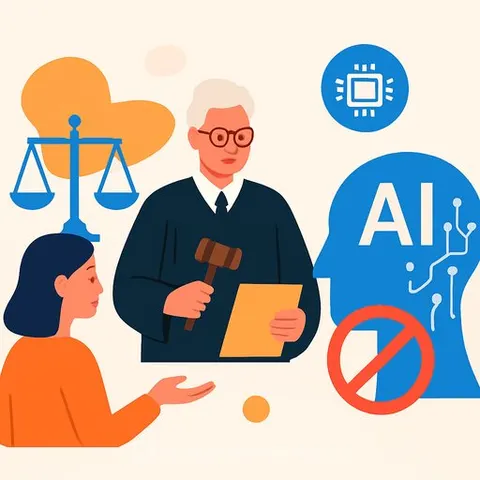
A federal magistrate judge has suspended enforcement of Colorado's AI discrimination law, with the state's own regulators agreeing to the pause and the U.S. Department of Justice intervening on the side of the company challenging it. The case marks the first time the DOJ has moved against a state AI statute, and it leaves the future of state-level AI regulation across the country in question.
xAI sued Colorado in federal court claiming the state's AI Act violates the First Amendment, the commerce clause, and the Fourteenth Amendment. On August 28, a magistrate judge in the U.S. District Court for the District of Colorado granted a joint motion to stay enforcement. Colorado's regulators consented to the suspension.
The order requires xAI to file either a motion for preliminary injunction or an amended complaint within 28 days of Colorado adopting new rulemaking or passing replacement legislation. In practical terms, the law is paused while the state decides what it wants the law to be.
The constitutional arguments
xAI's First Amendment claim treats a model's outputs as protected expression, meaning a law dictating what those outputs may not do would be a restriction on speech. The commerce clause argument contends a single state cannot regulate a national product without burdening interstate commerce. The Fourteenth Amendment claim invokes due process and equal protection.
The First Amendment argument carries the widest consequences and remains genuinely unsettled. If model outputs receive the same protection as a newspaper's contents, a substantial portion of proposed AI regulation becomes constitutionally difficult regardless of legislative intent.
The federal government's role
The DOJ moved to intervene in the case on April 24 in support of the challenge. It was the first time the department sought to intervene in a lawsuit challenging a state AI statute, and it was not improvised. The department established an Artificial Intelligence Litigation Task Force on January 9 with a stated mandate of challenging state laws regulating AI.
A standing federal unit now exists whose job is to contest state AI regulation, and its first significant outing coincided with a state agreeing to suspend its own law.
The regulatory vacuum
The underlying dispute is about who regulates AI in a country where Congress has not acted. In the absence of federal legislation, states have written their own rules: Colorado on algorithmic discrimination, California and New York on frontier model disclosure, Illinois on third-party audits. The result is a patchwork, and companies operating nationally face several incompatible regimes at once.
There is a legitimate argument in that. A model deployed in fifty states cannot practically comply with fifty different definitions of algorithmic discrimination, and the burden falls hardest on smaller developers who cannot fund fifty compliance programmes. For legal professionals tracking this space, the AI for Legal coverage offers ongoing analysis of how these disputes affect compliance obligations.
The counter-argument is equally straightforward. The remedy for a patchwork is federal legislation setting a single standard. Striking down state laws without passing one does not produce coherent national regulation. It produces no regulation.
What Colorado's law actually did
The statute targeted algorithmic discrimination by entities deploying AI systems - automated decisions in areas like employment, lending, housing, and insurance that produce disparate outcomes on protected characteristics. It is consumer protection law applied to automated decision-making, not a restriction on what models may be built or what they may say.
That gap between what the law regulated and how it is being contested is the substance of the case. Colorado wrote a rule about outcomes in regulated decisions. The challenge argues it is a rule about speech. Professionals working in regulated industries may find the AI Learning Path for Policy Makers useful for understanding how these legal frameworks are evolving.
What happens next
The stay is not a ruling. Nothing has been decided on the merits, and Colorado retains the ability to rewrite the law in a form that survives challenge. But the practical position today is that a state law against automated discrimination is not being enforced, on the agreement of the state that passed it, in a case where the federal government has taken the company's side.
Why this matters for legal professionals
For lawyers advising clients on AI compliance, the immediate takeaway is that state-level obligations are now unstable. Colorado's law was a reference point for similar proposals in other states, and its suspension creates uncertainty about which rules will ultimately survive. The DOJ's intervention signals that federal resources will be deployed against state AI regulation, which changes the risk calculus for any client facing compliance obligations under state statutes. Legal teams should monitor the case's next phase - xAI's preliminary injunction motion or amended complaint - and should not assume current state AI laws will remain enforceable in their present form.