
AI news ·
Fetterman rejects Sanders' call for AI pause, says it would let China lead
Sen. John Fetterman rejected Bernie Sanders' call to pause AI development, arguing a halt would cede global leadership to China. Fetterman said continued U.S. development is essential to avoid living under China's rules.
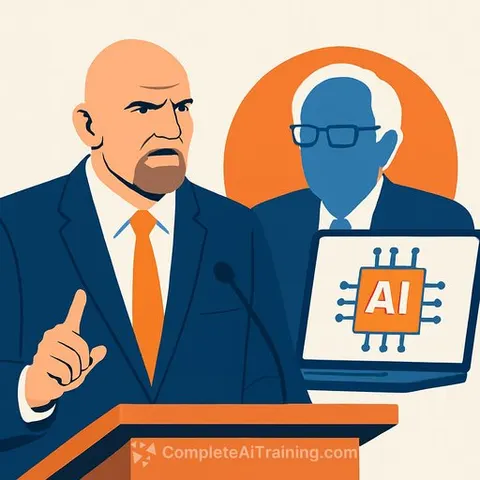
Senator John Fetterman rejected a call Monday from his progressive colleague Bernie Sanders to pause AI development, arguing that a halt would hand China the global lead. Fetterman posted on X that continued development is essential for American economic and national security interests.
"America must lead in the development of AI, otherwise we live under China's rules," Fetterman wrote. "That must not happen."
Sanders had sent an open letter to the CEOs of OpenAI, Anthropic, and Meta demanding they "stop building machines that humans cannot control" until their systems' capabilities are better understood. The letter urged immediate action to "avoid disaster" through a development moratorium.
The economic stakes of the AI race
AI development has become a bright spot in the broader U.S. economy, with strategic decisions now taking shape. China has improved its model capabilities and introduced cheaper alternatives to American systems, closing the gap in what has been a U.S.-driven industry.
Washington's leadership has pushed AI companies to accelerate development rather than pause. Concerns about Chinese superiority appear to outweigh questions about the systems the country is building.
Why this matters for IT and Development professionals
A pause on AI development would directly impact engineers, product managers, and executives responsible for building and deploying AI systems in the U.S. If China takes the lead, American developers would face an unusual situation: adapting to technical standards and safety rules set by a nation with different interests. Your skills in AI architecture and deployment could shift from leading to following. Understanding these policy discussions helps you anticipate which projects might accelerate or face regulatory uncertainty. For professionals who want to stay ahead of these decisions, the AI Learning Path for Policy Makers offers insights into how these developments directly inform career risk assessment.