
AI news ·
Florida Senate Moves to Ban AI-Only Insurance Claim Denials, Mandates Human Review
Florida Senate committee approved a bill banning AI-only insurance claim denials, requiring qualified human review. This ensures AI aids but doesn’t replace human judgment in claims decisions.
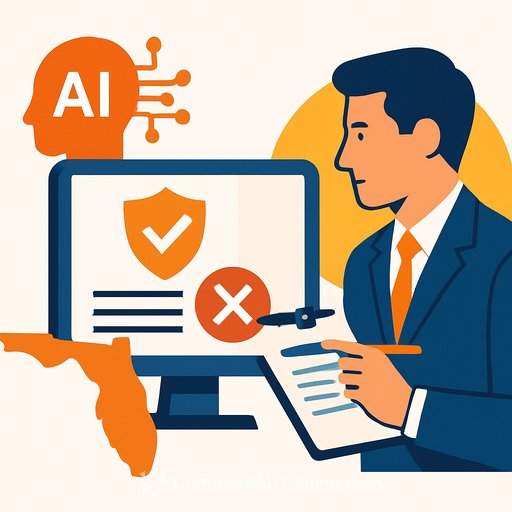
Florida Senate Advances Bill Banning AI-Only Insurance Claim Denials
A Florida Senate committee has unanimously approved a bill that prohibits insurance companies from using artificial intelligence as the sole factor in denying claims. The legislation requires that claim denial decisions be made by a “qualified human professional” who reviews both the claim and any AI-generated analysis.
The bill, known as SB 794, aims to balance innovation with consumer protection by ensuring that algorithms do not replace essential human judgment. It mandates that human reviewers verify the accuracy of outputs from AI systems, machine learning models, or algorithms before finalizing any denial.
According to the proposal, “An algorithm, an artificial intelligence system or a machine learning system may not serve as the sole basis for determining whether to adjust or deny a claim.” This reflects growing concerns nationwide about the reliance on automated systems in insurance decisions.
States like California have already taken steps to regulate AI use in insurance. For example, California’s recent legislation ensures that medical care decisions must involve healthcare providers rather than being determined solely by AI tools used by insurers. Moreover, lawsuits in California and Minnesota have challenged health insurers for allegedly using AI to screen or deny claims unfairly.
Senator Jennifer Bradley, the bill’s sponsor, emphasized the need to allow innovation without sacrificing accountability. She stated that while AI can improve efficiency and accuracy in certain scenarios, the legislation mitigates risks tied to inaccuracies and biases inherent in automated systems. The bill highlights that human oversight should supplement technology, not be replaced by it.
The Florida Medical Association, representing physicians, has expressed support for the bill, signaling alignment between healthcare providers and insurance regulators on this issue. Bradley has also engaged with insurers to address concerns and ensure the bill’s provisions are workable.
Before SB 794 can reach the full Senate, it must pass through two additional committees. Meanwhile, a related but broader House bill (HB 1555) filed by Representative Hillary Cassel would also require human review of claim denials but has not yet been scheduled for committee hearings.
What This Means for Insurance Professionals
- Human professionals must be involved in every claim denial decision, even when AI tools are used for initial assessments.
- Insurers will need to implement processes that verify AI outputs through qualified human review, increasing the demand for skilled claims adjusters and analysts.
- The bill sets a precedent for regulating AI in insurance, which could influence future policies in other states.
Insurance professionals should monitor this legislation closely, as it will affect claims processing workflows and compliance requirements. Those working with or developing AI tools in insurance must ensure that human oversight is integrated effectively.
Florida Study Links Most Alligator Attacks to Risky Human Behavior
A comprehensive study by the University of Florida analyzed nearly 300 years of data on alligator-human interactions and found that 96% of alligator bites are preceded by risky human behavior. This includes actions such as entering waters inhabited by alligators or engaging in activities that attract their attention.
The study highlights that alligators generally avoid conflict but will react defensively or hunt when provoked by stimuli like swimming or splashing. Fatal bites were most often associated with high-risk behaviors.
Frank Mazzotti, a wildlife ecology professor involved in the study, states that bites can be prevented by educating the public on safe behaviors around alligator habitats. The findings come as alligator mating season begins, during which these animals may be more active and present in unusual locations.
The Florida Fish and Wildlife Conservation Commission (FWC) advises that alligators 4 feet or longer posing threats to people, pets, or property can be reported via their Nuisance Alligator Hotline at 866-FWC-GATOR (866-392-4286).
Takeaways for Insurance Professionals
- Understanding the causes of alligator attacks can inform risk assessments in property and liability insurance related to alligator-prone areas.
- Risk mitigation strategies should emphasize public education and awareness to reduce claims from wildlife-related injuries.
- Insurance agents and adjusters working in Florida should be aware of seasonal patterns affecting wildlife risks, particularly during mating seasons.
Both the evolving role of AI in insurance and the persistent risks from wildlife like alligators highlight the importance of human judgment and proactive risk management in the insurance sector.