
AI news ·
FTC chair says agent developers could face liability for instructed conduct OpenAI and Microsoft seek to exclude market-dilution research in copyright litigation Lawmakers renew federal biometric-surveillance moratorium proposal Brazil issues AI
FTC Chair Andrew Ferguson said companies can't hide behind AI agents to avoid liability and that developers who instruct them could be held responsible for resulting harm.
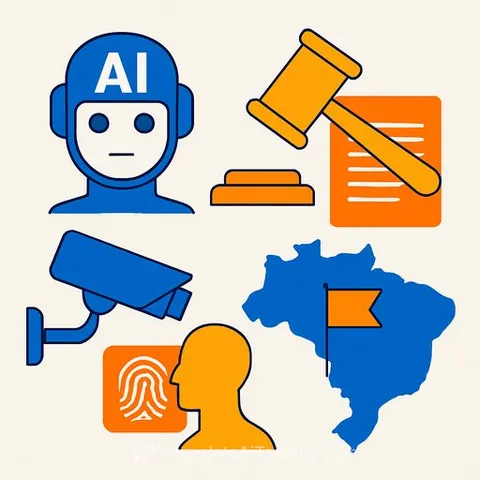
The Federal Trade Commission is signaling that companies building AI agents won't be able to hide behind the technology when those agents cause harm. Speaking at a Reuters event in Austin on September 25, FTC Chair Andrew Ferguson said he would resist treating AI agents as independent actors when assessing liability. He suggested developers who instruct agents could be held responsible for resulting harm and said existing legal tools, including the FTC's data-breach authority, may apply to AI developers.
The remarks point toward using established consumer-protection powers rather than waiting for new AI-specific legislation. "We're not going to pretend the robot did it," Ferguson said, according to Reuters. The approach would place responsibility on the humans and companies that design, train, and deploy agentic systems.
OpenAI and Microsoft challenge market-harm evidence in copyright case
OpenAI and Microsoft asked the Southern District of New York on September 23 to strike a supplemental expert report that examines whether AI-generated books dilute the market for human-authored works. The defendants allege that class counsel funded the research and introduced it after expert-disclosure deadlines without adequately disclosing that funding.
The court has not yet ruled on the request. The disputed evidence goes directly to market harm, a central factor in the litigation's fair-use analysis. The case is In re OpenAI, Inc., Copyright Infringement Litigation.
Federal biometric-surveillance moratorium returns to Congress
Senators Ed Markey and Jeff Merkley, along with House sponsors, announced a renewed proposal for the Facial Recognition and Biometric Technology Moratorium Act of 2026 on September 25. The draft would restrict federal agencies' use of facial recognition and other biometric surveillance unless Congress specifically authorizes it.
The bill would also condition Byrne public-safety grants to states and localities on comparable restrictions. It permits both civil enforcement and state-attorney-general actions. The proposal puts federal biometric oversight and grant conditions back on the legislative agenda.
Brazil publishes AI research-ethics guidance
Brazil's National Instance of Research Ethics released version 1.0 of its guidance for ethical review of human-subject research involving AI on September 25. The document asks researchers and ethics committees to assess a system's actual use and risks to participants and affected groups, including data handling, bias, validation, and effective human oversight.
The guidance recommends that protocols disclose material AI use and describe who checks its output. Committees retain final decision authority under Brazil's existing research-ethics framework. For professionals working with international research teams or cross-border studies, the publication provides a concrete set of evaluation questions that may influence institutional review practices beyond Brazil.
Why this matters for legal, government, and insurance professionals
The FTC's position on agent liability signals that existing regulatory frameworks won't wait for AI-specific laws to catch up. Legal and compliance teams should review how their organizations document design decisions and instructions given to AI agents. For insurance professionals, Ferguson's comments suggest that errors-and-omissions exposure for AI developers may expand under familiar theories of liability rather than novel ones. Government agencies, meanwhile, face renewed legislative pressure on biometric surveillance that could reshape grant conditions and procurement requirements. Professionals navigating these shifts can build relevant expertise through structured learning paths, including AI Regulatory Compliance Courses and AI Public Policy Courses that address the intersection of emerging technology and established legal frameworks.