
AI news ·
Future doctors need AI fluency and empathy, Hong Kong medical leaders say
Hong Kong's future doctors must be ready to serve 18 million people, not just the city's 7 million, as cross-border demand grows. Medical leaders said AI fluency and emotional resilience are now non-negotiable, with soft skills becoming more critical than ever.
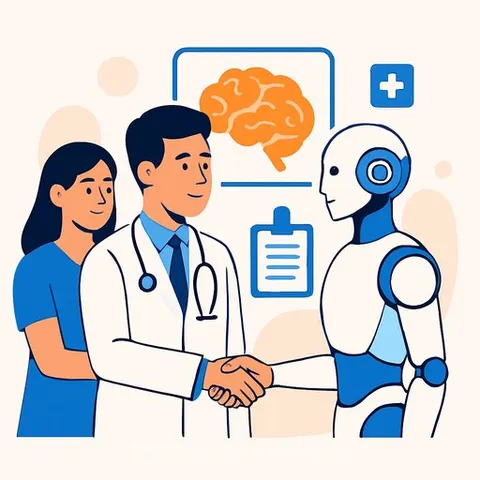
Hong Kong's future doctors must pair clinical expertise with emotional resilience and AI fluency, medical leaders said Saturday at the inaugural Global Education Summit. The two-day event, co-organised by the South China Morning Post and HSBC Premier, drew about 5,000 policymakers, educators and parents to discuss talent development and technology's role in reshaping healthcare.
Dr Chung Kin-lai, chief executive officer of CUHK Medical Centre, pointed to cross-border demand as a defining pressure. "We always talk about people going north, going to Shenzhen … for medical services. But I would say that it's a good thing for a future doctor. You're going to be a doctor not just for 7 million people. You're going to be a doctor for 18 million people," he said.
What medical training must now teach
The panel, titled "Powering Hong Kong's healthcare talent pipeline: from medical education to research and industry impact," examined how institutions are adapting. With AI altering clinical workflows, traditional evaluation methods for medical students are shifting. Chung said soft skills have become more critical than ever, as machines handle more diagnostic and administrative tasks.
Speakers rejected the idea that AI will replace physicians. Instead, they argued the technology will reward doctors who ask sharper questions and bring stronger interpersonal abilities to patient care. This aligns with broader trends in AI for Healthcare, where tools are augmenting rather than substituting clinical judgment.
Preparing for a larger patient base
Chung's reference to an 18-million-person patient pool reflects the growing integration of Hong Kong's healthcare system with neighbouring cities. Medical graduates now face expectations that extend well beyond local hospitals. Training programmes are recalibrating to produce doctors who can operate across jurisdictions and care delivery models.
The summit's format mixed policy discussions with practical sessions on how AI for Education is changing how institutions teach and assess clinical competence. Multiple speakers stressed that empathy and communication cannot be automated, making them non-negotiable components of modern medical training.
Why this matters for healthcare professionals
The signal from Hong Kong's medical leadership is direct: AI proficiency is no longer optional, but it is also not a replacement for core clinical skills. Doctors who invest in both technical AI knowledge and patient communication will be best positioned as care models evolve. For working healthcare professionals, the message is to treat AI literacy as a career requirement, not a side interest.