
AI news ·
Gijang Hospital in Busan adopts Daewoong Pharmaceutical's AI monitoring system thynC for patient safety
Gijang Hospital in Busan deployed AI bedside monitoring on 50 of its 154 beds. It brings continuous vital-sign tracking to an underserved area short on staff.
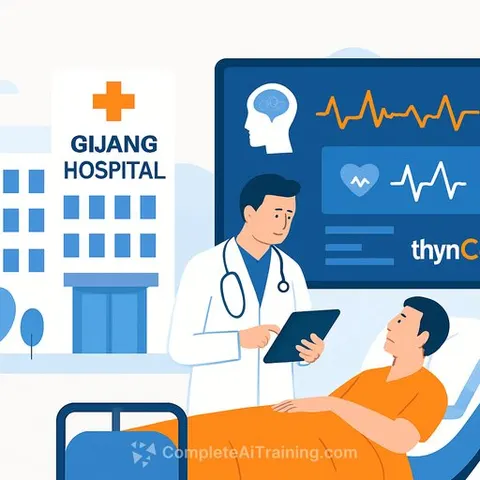
Gijang Hospital in Busan has deployed Daewoong Pharmaceutical's AI-powered smart bedside monitoring system, thynC, across 50 of its 154 inpatient beds. The move brings continuous, real-time vital sign monitoring to a regional hospital operating in a medically underserved area, directly addressing long-standing infrastructure and staffing challenges.
Closing the gap in regional healthcare
Gijang County was classified as a medically underserved area in a Health Insurance Review and Assessment Service baseline study last year. Shortages of healthcare resources, limited accessibility, and aging medical equipment have strained the region's ability to deliver consistent inpatient care. The hospital's adoption of thynC targets these gaps by introducing a AI for Healthcare layer that works alongside existing clinical workflows.
"Our highest priority is patient safety, and we decided to adopt the AI bedside monitoring system so that local residents can receive inpatient care with greater peace of mind," said Dr. Heo Sung-geun, president of Gijang Hospital. The hospital is marking its 29th anniversary this year and will use the smart ward project as a springboard for broader facility renovations.
How thynC works on the ward
The system continuously tracks patients' vital signs and immediately alerts staff when abnormal readings or safety incidents occur. That includes falls, bed exits, and sudden physiological changes - events that carry higher risk during nighttime hours or in wards without a dedicated caregiver present. Park Hyung-cheol, head of ETC Marketing at Daewoong Pharmaceutical, said thynC was built to help regional hospitals with workforce shortages maintain round-the-clock observation and respond faster to clinical changes.
Nursing teams at Gijang Hospital can now manage patient data through an integrated dashboard, reducing the manual burden of spot checks while supporting more precise clinical decisions. The hospital expects the unified view of patient vitals to cut response times and lighten documentation workloads, freeing staff for higher-priority tasks.
Why this matters for healthcare professionals
For nurses and hospital leaders in resource-limited settings, systems like thynC demonstrate how monitoring automation can close observation gaps without requiring a full staffing overhaul. The focus shifts from periodic manual checks to exception-based alerts, allowing teams to act on clinical deterioration before it escalates. Early adoption in regional hospitals also provides a reference model for other underserved facilities weighing similar digital upgrades.