
AI news ·
Giles Martin and Industry Leaders Demand Government Protect Artists from Unchecked AI Use
UK industry leaders warn the Data (Use and Access) Bill risks artists losing control and payment for AI use of their work. Calls grow for transparency and stronger protections.
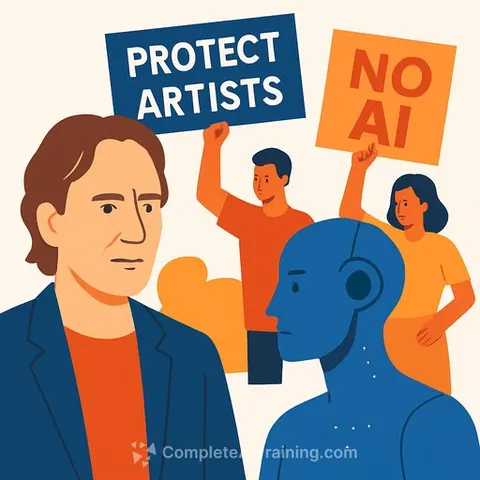
Industry Leaders Urge UK Government to Strengthen Protections for Artists Against AI Misuse
A gathering of creatives, industry experts, and politicians in London has raised serious concerns over the UK Government’s proposed Data (Use and Access) Bill. The Bill, which focuses on data-sharing agreements, faces criticism for potentially allowing AI companies to use creative works without permission or payment.
Giles Martin, a Grammy-winning producer and son of Beatles legend George Martin, voiced his frustration at the event. He argued the Government is not doing enough to safeguard artists’ rights in the face of growing AI influence. Martin emphasized that creators should retain control over their work and voice:
“If Paul McCartney today writes Yesterday, that should belong to him. He should decide what happens to that, or his voice. Right now, the Government isn’t protecting artists enough.”
Martin’s comments echo broader industry fears. UK Music warns that removing transparency safeguards from the Bill could leave creatives vulnerable, especially since companies training generative AI models like ChatGPT may use copyrighted content without disclosure or compensation.
Concerns Over Transparency and Copyright Protections
The Bill originally included amendments proposed by Baroness Kidron to ensure transparency and compliance with international standards. However, these were stripped out during committee stages, raising alarms among creatives and policymakers.
Alex Sobel, MP for Leeds Central and Headingley, tabled an amendment demanding that AI companies disclose when and how they use creative works. Sobel explained that without such transparency, creators risk losing income and control over their content:
- “It’s vital that creators know what’s being used. Without traceability, the creative industries could face ruin.”
- “AI could generate songs mimicking artists like Dua Lipa or Calvin Harris, but neither the artists nor record companies would earn anything because the source data is unknown.”
Sobel warned that without protections, emerging artists may struggle to earn a living, potentially stalling new creative talent. He also highlighted the need to distinguish between generative AI, which creates new content, and assistive AI, which supports human creators.
Industry Calls for Balanced Approach
Lord Watson of Wyre Forest, chairman of UK Music, acknowledged the music industry’s long-standing embrace of technology. However, he stressed the unique risks posed by generative AI, urging the Government to provide clear protections for creators and businesses:
“We’re at a critical point for British music. The right protections will allow the industry to continue thriving.”
Currently, UK copyright law protects songs, films, paintings, and more. Yet, a recent Government consultation suggested tech firms might gain free access to these works for AI training unless creators opt out. Industry leaders argue this shifts the burden unfairly onto artists and could undermine existing copyright frameworks.
What Creatives and Government Need to Consider
- Ensuring creators retain control and receive payment when their work is used to train AI models.
- Mandating transparency from AI developers about the datasets they use.
- Clarifying different AI types and their implications for creative industries.
- Balancing innovation with protection to sustain future creative output.
As the Data (Use and Access) Bill proceeds through Parliament, these discussions will shape how the UK supports its creative sectors in an increasingly AI-driven environment.
For professionals interested in how AI tools impact creative work, exploring courses on AI and copyright can be valuable. Platforms like Complete AI Training offer resources to understand AI applications and their implications for creatives.