
AI news ·
Global Call for Human Rights-Centered AI Governance on World Press Freedom Day 2025
On World Press Freedom Day 2025, experts called for AI governance grounded in human rights to protect freedom of expression and media integrity. Addressing digital divides and ethical AI use is key to trustworthy information.
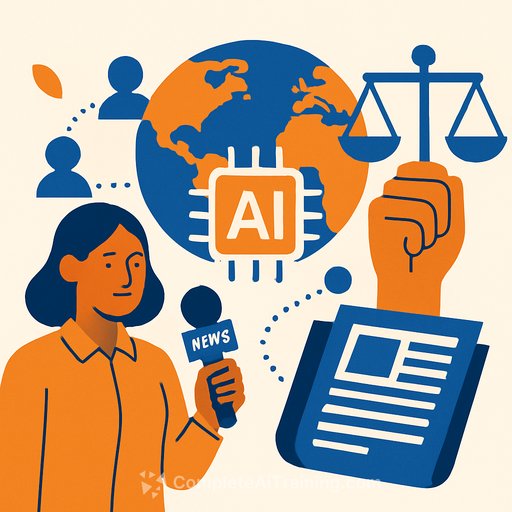
Global Media Freedom Demands Human Rights-Based AI Governance on World Press Freedom Day
Artificial Intelligence (AI) is transforming how information is created, shared, and consumed. Its impact on freedom of expression and media freedom is profound, raising both opportunities and serious human rights concerns. As AI technologies advance, ensuring their development and deployment respect international human rights standards is crucial for maintaining a free and trustworthy information ecosystem.
On World Press Freedom Day 2025, key human rights mandate holders gathered in Brussels to address these challenges. They emphasized the need to embed freedom of expression and information integrity at the core of AI systems from the very beginning, rather than as an afterthought.
Embedding Human Rights in AI Development
Pedro Vaca, Special Rapporteur for Freedom of Expression at the Organization of American States (OAS), pointed out that AI developers often focus on technical ethics and market success, leaving human rights considerations until too late. He highlighted the need to shift from simply managing risks to building AI systems that actively support freedom of expression and protect democratic information flows.
Challenges for Journalism in the Age of AI
Jan Braathu, OSCE Representative on Freedom of the Media, underscored the growing reliance of media on Big Tech platforms powered by AI. This dependency raises concerns about journalist safety, news visibility, and the unauthorized use of journalistic content to train AI models without attribution or compensation. Braathu called for creating public information spaces that prioritize public interest content to support democracy and social stability.
Addressing Africa’s Digital Divide
Geereesha Topsy Sonoo, Special Rapporteur on Freedom of Expression with the African Commission on Human and Peoples’ Rights, highlighted how Africa faces a widening digital divide. With limited access to AI infrastructure and foundational models largely developed outside the continent, African languages, cultures, and realities are often underrepresented. This imbalance risks increasing discrimination and social inequalities, affecting the quality and relevance of AI tools for African media and citizens.
AI’s Role in Restoring Public Trust
Irene Khan, UN Special Rapporteur on the Right to Freedom of Opinion and Expression, reminded that AI carries both risks and benefits. She stressed the importance of a human rights-centered approach involving governments, companies, and civil society. Success should be measured by AI’s ability to improve information quality and rebuild public trust, rather than speed or profit.
Collaborative Efforts for Democratic AI
The mandate holders reaffirmed the value of international dialogue and multi-stakeholder collaboration on AI and freedom of expression issues. They aim to provide practical guidance for safeguarding democratic processes and ensuring information integrity in the face of AI-driven change.
For communication professionals, these developments underline the importance of advocating for transparent, rights-respecting AI governance that supports media freedom and trustworthy information. Staying informed and engaged with these global conversations is essential.
To deepen your knowledge on AI’s impact and ethical use in communications, consider exploring specialized AI courses and certifications available at Complete AI Training.