
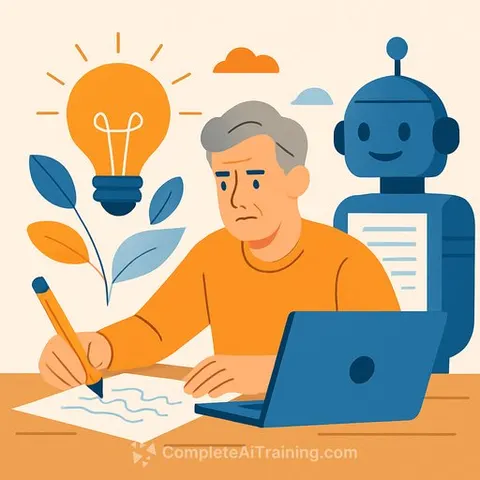
Gray Matters: Stoking the Creative Mind in a World of Chatbots
Using generative AI tools for writing demands a careful balance. For many professionals, especially those who struggle with writing, AI can be a helpful assistant for drafting emails or memos. But for full-time writers, relying on AI to carry the load, particularly for longform content, risks dulling creative skills. This isn’t just theory—I’ve seen it happen in edited work and even felt it myself when under pressure.
If this rings a bell, try a simple test: pick up a copy of a publication like The New Yorker or a book by a favorite author. Notice how their writing flows and surprises you. If your own writing once matched that quality but now feels off, it might be time to reconnect with that creative spark.
The AI Echo Chamber
Large language models (LLMs) often recycle phrases and patterns. When asked to regenerate content, they might apologize but then produce something that sounds eerily familiar. One colleague even pointed out you can predict what comes next by swapping out a few words. This tendency highlights why human input remains crucial.
If you create content at scale, why does this matter? Two reasons: to serve real people and to satisfy search engines. Users expect helpful, reliable information, and search engines reward pages that deliver just that. Anecdotally, AI-generated content that’s carefully reviewed and optimized by a human performs better for audiences and SEO alike.
So, if you lean on AI to write, be prepared to do more than just minor edits. Effective web copy needs thoughtful retouching to meet SEO standards and sound genuinely human. AI can assist in crafting original content and getting it noticed, but don’t let it take over. Stay curious and flexible—best practices will shift as tools improve.
AI: Surprisingly Brilliant at Some Things
Generative AI shines as a time-saver for brainstorming topics, outlining content, or producing bulk items like spreadsheet entries where quantity matters more than polish. It’s great at distilling complex information into digestible summaries—even simplifying concepts for a child’s understanding.
In some cases, long-form AI-generated content can be used after supplying detailed prompts, but rigorous fact-checking and significant revisions remain necessary. Trust but verify, always.
AI and the Creativity Conundrum
Our role as writers and editors isn’t to dismiss AI but to prevent it from eroding creativity. When you were hired, your creative flair was likely a key factor. Editors have a responsibility to nurture that spark, not let it fade.
There’s a fine line here. We must embrace AI tools to stay efficient but also protect the artistry behind strong writing. Think of learning a new machine: it can boost productivity but requires skill and care. Leaders need to foster creativity in their teams, keeping alive the qualities that made each writer valuable in the first place.
Enter the Morning Scribe
One effective way to maintain creativity is through brief daily writing exercises, like the Morning Scribe. These short prompts serve as a warm-up, breaking free from the robotic, formulaic style AI often generates. It’s a moment to flex imagination and experiment with language before tackling the day’s tasks.
These exercises take just a few minutes—about the time it takes to grab coffee—and vary each day. While they might not literally regrow neural pathways, they do reset the mind and remind writers why they love their craft. The team often finds this practice revealing and energizing, offering a glimpse of their authentic voices beyond marketing copy.
When the talent can craft poetic lines about something as ordinary as a rusty screw or a pair of sneakers, imagine the depth they bring to product pages or guides. Facing the challenge of writing about a mundane topic, it helps to have that creative fuel ready and burning.
- Use AI to assist, not replace your creative process.
- Always review and revise AI-generated content for quality and SEO.
- Incorporate daily creative exercises to keep your writing fresh.
- Keep the human touch front and center in all your work.
For writers looking to sharpen their skills with AI tools while maintaining creativity, resources like Complete AI Training’s latest courses can offer practical guidance on integrating AI thoughtfully into your workflow.