
AI news ·
H1 and Novo Nordisk announce artificial intelligence partnership for clinical trials
Novo Nordisk and H1 formed a partnership to apply AI to clinical trials, aiming to cut development timelines. H1 will take over Novo Nordisk's StudyHub platform.
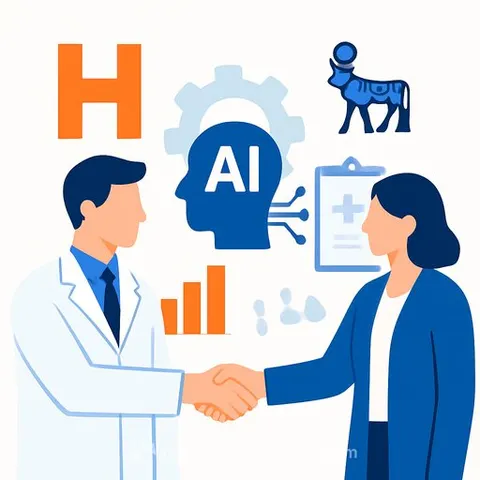
H1 and Novo Nordisk have announced a strategic partnership to apply AI across clinical trial design and execution, combining H1's healthcare data platform with Novo Nordisk's internal digital and AI tools. The companies said the goal is to reduce development timelines and enable faster, more informed decisions in clinical research.
Under the agreement, Novo Nordisk will use H1's technology to strengthen study design, site selection, and patient enrollment. Better site choices and faster enrollment are expected to reduce the time between study start and completion.
What the deal includes
H1 brings its AI platform and proprietary healthcare data to the collaboration. Novo Nordisk contributes the digital and AI capabilities it has built internally. Together they will create AI-ready datasets and clinical development workflows for research operations.
The partnership sits at the intersection of AI for Healthcare and AI for Science & Research. The inputs are clinical and operational data; the outputs are decisions about where to run studies and which patients to enroll.
Ariel Katz, CEO of H1, said the company is "proud to partner with Novo Nordisk to enhance innovation in their clinical trials and to play an important part to bring their life-changing drugs to patients quicker."
StudyHub changes hands
As part of the partnership, H1 will acquire the rights to further develop StudyHub, Novo Nordisk's digital and AI-enabled clinical development platform. The platform will continue to evolve within H1's portfolio of AI-driven clinical research tools for life sciences organizations.
Mishal Patel, Group Vice President of AI & Digital Innovation, R&D at Novo Nordisk, said the next wave of AI will "help us reduce cycle times, address process inefficiencies at scale, and fundamentally improve how we select clinical trial sites and design studies."
Why this matters for IT and Development professionals
Clinical trial software has traditionally been built around static workflows and manual data entry. This deal shows a large pharmaceutical company buying external AI platform capabilities rather than building everything in-house. That points to a shift in how enterprise R&D systems will be assembled: AI-ready datasets and machine-learning pipelines are becoming core infrastructure, not optional extensions.
For developers, the practical takeaway is that AI platforms in regulated industries will be judged on integration and reliability, not just model performance. Knowing how to build, validate, and deploy those systems under regulatory constraints will be a core part of the job.