
AI news ·
Harvard humanities faculty resist dean's call to embrace AI in writing courses
Harvard Dean David J. Deming proposed encouraging AI in writing-intensive courses, a move that drew immediate pushback from humanities faculty who say it undermines the core purpose of writing instruction.
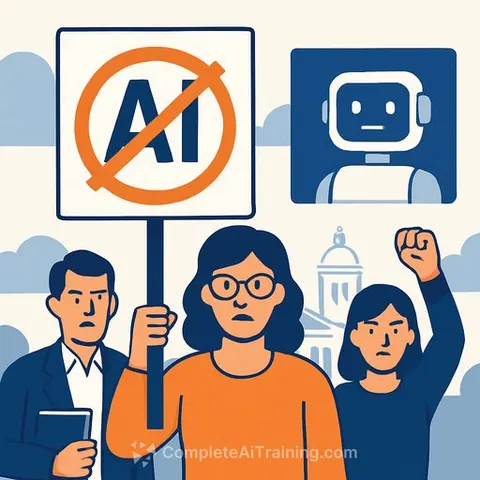
Harvard College Dean David J. Deming proposed integrating artificial intelligence into writing-intensive courses in an email to students Wednesday, a move that drew immediate pushback from humanities and social sciences faculty who argue the technology undermines the core purpose of writing instruction. The proposal, which Deming described as "initial thoughts," signals a potential shift in how the College approaches AI as it plans to roll out advisory guidelines by the end of the academic year.
Deming suggested "AI acceptance or even encouragement" in writing- and project-heavy classes, arguing the approach would help faculty avoid "the AI-detection business because it damages trust between faculty and students." His message linked to an article by Colorado State University professor Kyle Saunders contending that students need AI skills for the modern workforce.
Most faculty interviewed agreed they wanted to avoid policing student AI use. On the broader question of encouraging AI in writing courses, however, the consensus fractured.
A clash over what writing actually is
English professor Deirdre Lynch said she will maintain a blanket ban on AI tools in her two fall courses despite Deming's suggestion. She framed writing as an inherently personal struggle that AI short-circuits. "Writing is sort of a personality and individual thoughts clashing with something shared called language," she said. "You figure out what your style is through that clash." Lynch added that Deming's enthusiasm for the tools overlooked larger concerns, including environmental impact and effects on student skill-building.
History professor Peter E. Gordon went further in a written statement, arguing AI use would worsen what he called a "marked decline in student attention" since the rise of digital media. "It may also discourage students from developing their own responses to works of art, music, literature, and philosophy, encouraging them to rely upon conventionalized experiential reports as generated by the new technologies," he wrote.
Existing AI policies reveal a disciplinary divide
A Crimson analysis of roughly 600 fall 2026 courses found a sharp split across divisions. More than half of science and engineering courses allowed some use of AI. That figure dropped to 35 percent in the Social Sciences Division and 27 percent in the Arts and Humanities Division. The numbers reflect a gap between Deming's vision and current faculty practice in writing-heavy fields.
The College has already begun introducing AI into freshman instruction through a mandatory AI learning module for first-year Expository Writing courses. Amy Hanes, an Expos preceptor, said Deming's emphasis on AI would not change her teaching but worried about how his comments might land with students. "I am concerned that students may start to question how valuable or necessary writing is if the conversation shifts to we should use AI with things that have to do with writing," she said.
Middle ground: AI as preparation, not production
Some faculty found room for compromise. Comparative Literature and English professor Homi K. Bhabha, teaching one undergraduate course this fall, said he would continue having students keep AI logs documenting how they used the tools to prepare for class. But he drew a firm line at outsourcing the thinking itself. "AI can help you prepare the ground for your thinking, for your preparation. But once the ground is prepared, you have to stand on it with your own voice and your own vision," he said.
College spokesperson Jonathan Palumbo emphasized that Deming's email is a "prompt to continue a conversation." Dean of Undergraduate Education Amanda Claybaugh sent a separate email to faculty Wednesday asking them to share their views on AI use in class but made no explicit suggestions for changes to AI policies.
Why this matters for writers
The Harvard debate crystallizes a tension writers face across industries. Employers increasingly expect fluency with AI for Writers, yet the foundational skill of developing an authentic voice comes from wrestling with language directly - not from refining machine output. Bhabha's distinction between using AI for preparation versus production offers a practical line: the tool can gather, organize, and suggest, but the final synthesis must remain human. For working writers watching academic institutions set norms, the message is that AI literacy is becoming table stakes while the premium on original thinking grows sharper.