
AI news ·
Healthcare AI agents take on prior authorization, patient navigation and clinical trial matching
Healthcare organizations are deploying AI agents to automate prior authorization, patient follow-up, and clinical trial recruitment. A 2026 study found TrialMatchAI surfaced a relevant trial among its top 20 recommendations for 92% of oncology patients.
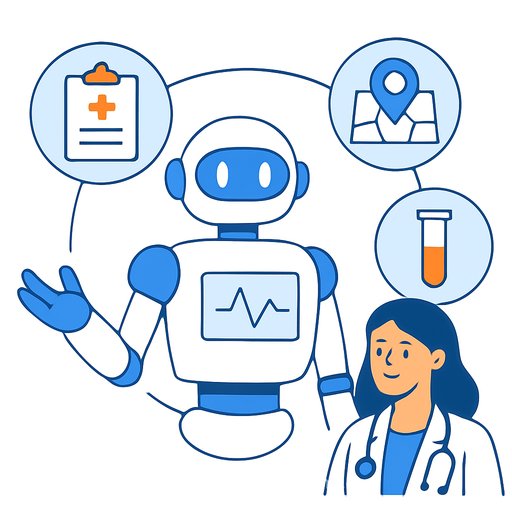
Healthcare organizations are deploying AI agents to close the gap between a physician's decision and the care a patient actually receives. These systems can collect clinical information, move between separate software platforms, and initiate actions without waiting for human prompts, targeting three persistent bottlenecks: insurance prior authorization, patient follow-through after appointments, and clinical trial recruitment.
Automating the prior authorization paper chase
Prior authorization functions as a multi-party relay where medical records, coverage rules, and approval forms shuttle between providers, payers, and patients. One missing document halts the entire sequence. An AI agent can begin with a physician's order, determine whether authorization is required, pull the relevant clinical evidence, and assemble the submission. It then sends the request to the insurer, monitors its status, and responds when the payer requests additional information.
The regulatory calendar adds urgency. Under the CMS Interoperability and Prior Authorization Final Rule, affected payers must meet new API requirements by January 1, 2027. Those APIs will let providers determine authorization requirements and exchange requests and decisions electronically. An agent could use those connections to manage the process from inside a provider's existing system and draft an appeal after a denial, supported by the patient's records and the payer's stated reason. Clinicians would still review cases requiring medical judgment, but the searches, status checks, and repetitive data entry that consume staff time would diminish.
Keeping patients on track after the appointment
Healthcare routinely hands patients a list of next steps and leaves them to coordinate the work themselves. An agentic care navigator can convert a discharge plan or physician referral into a sequence of completed tasks: scheduling a specialist visit, checking insurance coverage, sending preparation instructions, and arranging transportation. After discharge, the agent delivers medication reminders, asks about symptoms, and confirms whether the patient attended follow-up appointments.
This model is moving from concept to product. CVS Health is launching Health100, an AI-based platform developed with Google Cloud that gives consumers proactive support across doctors, pharmacies, and insurance. An NIH-supported clinical trial demonstrated that an AI screening tool could identify hospital patients with opioid use disorder and generate referrals to specialists. An agent could extend that approach by tracking whether the referral produced an appointment and escalating stalled or high-risk cases. The agent would not diagnose or change prescriptions - its role is keeping the care plan moving and alerting a clinician when human intervention is needed.
Finding clinical trials patients might otherwise miss
Matching a patient to an appropriate clinical trial requires comparing diagnosis, treatment history, lab results, and genetic markers against lengthy eligibility criteria. Much of that data sits in physician notes and other unstructured records. An AI agent can search those records, compare findings with available trials, and produce a ranked list of potential matches with an explanation for each recommendation.
A 2026 Nature Communications study of TrialMatchAI shows the capability's progress. The system processes structured records and unstructured physician notes, retrieves relevant studies, and conducts a criterion-by-criterion eligibility assessment. In real-world validation, it found at least one relevant trial among the top 20 recommendations for 92% of oncology patients. Experts validated more than 90% accuracy in its eligibility classifications. An agentic version could take additional steps: checking whether a trial is recruiting, identifying the closest participating site, preparing patient information for review, and notifying the research coordinator when new test results change eligibility. Researchers and clinicians retain authority over final screening, consent, and enrollment. The agent's value lies in finding opportunities that time-pressed teams or patients may never discover.
Why this matters for healthcare professionals
Agentic AI's near-term healthcare value concentrates where coordination breaks down. Prior authorization, patient navigation, and trial matching each demand work across multiple systems, repeated follow-up, and careful handling of sensitive information. For professionals working in AI for Healthcare, the practical shift is clear: these AI Agents & Automation tools do not replace clinical judgment. They absorb the administrative friction - searches, status checks, data re-entry - that delays treatment. With firm controls and human review, agents could shrink those gaps while helping patients reach approved care, follow-up services, and experimental treatments faster.