
AI news ·
Healthcare organizations expand AI use in diagnostics and patient monitoring
Hospitals are moving AI diagnostics and remote patient monitoring from pilots into daily clinical use to catch cancer, heart disease, and chronic conditions earlier. Continuous wearable tracking is cutting readmission rates by flagging health changes before they become emergencies.
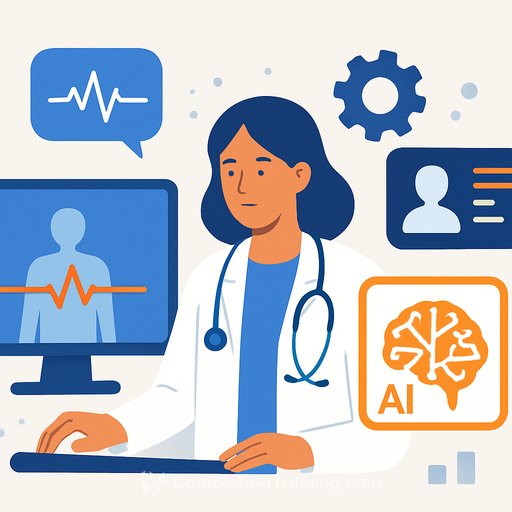
Hospitals and clinics worldwide are deploying artificial intelligence tools to catch diseases earlier and monitor patients remotely after discharge, a shift that is moving from pilot programs into daily clinical use. The expansion, reported across multiple health systems in 2026, targets cancer screening, heart disease detection, and chronic condition management where earlier intervention directly changes treatment outcomes.
AI as a diagnostic support system
Machine learning models now scan medical images, lab results, and patient histories to flag abnormalities that might escape human review or take longer to identify. Radiologists use these tools as a second set of eyes rather than a replacement for clinical judgment. In cancer screening and ophthalmology, the technology has shown particular promise for catching conditions at stages where treatment is less invasive and more effective.
This represents a structural change from reactive medicine. Instead of waiting for a patient to present with symptoms, care teams can act on early warning signals surfaced by algorithms trained on vast datasets of prior cases. The tools do not make diagnoses independently - they highlight areas of concern for a physician to evaluate.
Remote monitoring moves beyond the hospital walls
Wearable sensors and connected devices now track heart rate, blood oxygen, glucose levels, and movement patterns in real time after a patient goes home. When readings deviate from established baselines, the system alerts a care team before a minor change escalates into an emergency admission. Hospitals report that continuous remote monitoring reduces readmission rates and gives patients recovering from surgery or managing chronic illness more confidence to stay at home.
For people with diabetes or heart failure, this capability matters most. Catching fluid buildup or blood sugar swings early can prevent crises that would otherwise require ambulance transport and inpatient stays. The data streams also give clinicians a fuller picture of how a patient is actually doing between office visits, rather than relying on a single snapshot every few months.
Why healthcare organizations are making these investments public
As health systems roll out AI diagnostics and remote monitoring, many are issuing public announcements about partnerships, pilot results, and deployment timelines. This communication serves multiple audiences - patients evaluating where to seek care, investors tracking health tech adoption, and industry peers watching for proven approaches.
Distribution platforms like 500NewsWire enable hospitals and health tech startups to share these updates across a network of media outlets simultaneously. The approach helps organizations reach journalists and the public without depending on a single publication to carry the story. For smaller research groups and regional hospitals, this broadens visibility substantially.
What this means for clinical staff
The tools are designed to handle data sorting and pattern recognition - tasks that consume hours of clinician time - so that doctors and nurses can focus on direct patient interaction. AI does not replace the human elements of care: listening to a patient describe symptoms, explaining a treatment plan, or providing reassurance during a difficult moment. It reduces the time spent hunting through records and images for subtle indicators.
As one hospital administrator involved in a multi-site monitoring pilot put it, the technology "gives healthcare workers better tools so they can spend more time with patients instead of digging through data."
Why this matters for healthcare professionals
For clinicians, the practical takeaway is that AI is becoming a standard part of the diagnostic and monitoring workflow - not a future concept. Radiologists, cardiologists, and primary care teams will increasingly receive algorithm-generated flags alongside raw test results. Learning to interpret these outputs critically, understanding their limitations, and integrating them into clinical decision-making are skills that will affect day-to-day practice. The systems improve with real-world use, meaning the tools deployed today will be measurably more accurate a year from now as training data accumulates from actual cases.