
AI news ·
Helport AI expands AI labor deployments across consumer hardware operations
Helport AI's AI workforce now handles live after-sales support for consumer hardware brands across North America and Europe, covering chat, email, and voice.
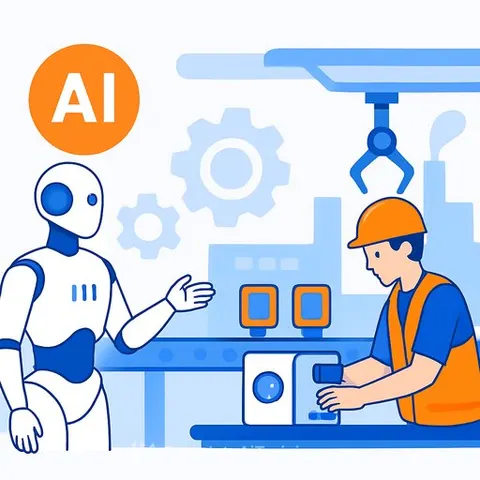
Helport AI (NASDAQ: HPAI) said its AI workforce is now handling live after-sales operations for consumer hardware brands across North America and Europe. The deployments, which cover chat, email, and voice interactions, mark the company's second commercially validated vertical after consumer finance.
Connected-device companies entering new markets typically face a familiar problem: more customers means more support staff, in more languages, across more channels. Helport AI is testing a different approach. Instead of using AI as a tool to make human agents faster, the company is deploying AI as the service capacity itself - a model it calls AI Labor.
How the AI Labor model works
Helport AI's AI+BPO model combines three layers. A Unified Communication Platform connects all customer interactions across chat, email, and voice into one environment. The AI Labor System then handles routine requests and completes eligible interactions without human involvement. Human specialists monitor the system and take over exceptions, escalations, and cases that require judgment.
The company argues this changes a basic economics of traditional outsourcing: the link between transaction volume and headcount. In a conventional BPO operation, higher volume requires more staffing. Under Helport's model, incremental volume can be absorbed by AI capacity first, allowing human headcount to grow more slowly than the business it supports.
If you're a customer support professional, this is the trend to watch. For related training, see this AI Learning Path for Call Center Supervisors.
Live deployments in consumer hardware
Helport AI entered the vertical through direct enterprise engagements and its April 2026 partnership with QuickCEP. The company provides overseas contact center and AI technical services to Dreame Technology, a robot vacuum brand that ranked No. 1 globally in sales volume and revenue in Q1 2026, according to IDC data cited in Dreame materials. The commercial agreement began generating revenue in May 2026.
The company also supports Birdfy, a smart bird feeder camera brand, plus a robotic pool cleaner brand and an at-home beauty device brand. The latter two remain subject to confidentiality obligations.
Why connected hardware is a test case
Consumer hardware produces support volume that makes AI economics visible quickly. Many after-sales interactions repeat around a finite group of common queries: setup, connectivity, troubleshooting, warranty, returns. Repetition gives trained AI workflows a chance to resolve a meaningful share of interactions without human intervention.
Demand is also seasonal. Prime Day, Black Friday, Cyber Monday, and product launches create sharp spikes in contact volume. A traditional staffing model must hire and train temporary workers for those peaks. AI capacity can absorb the extra volume first, leaving human specialists focused on the cases that actually need them.
Helport AI measures AI penetration as the percentage of interactions resolved without human intervention, tracked separately across chat, email, and voice. Chat and email currently carry the highest shares. Voice is lower but rising as speech workflows mature.
The company has previously disclosed a comparable pattern in consumer finance: one local monitoring employee can support the messaging volume generated by more than 100,000 outbound call attempts.
Building AI labor as infrastructure
Traditional BPO companies sell human capacity. Traditional SaaS companies sell software customers use themselves. Helport AI is building a third model: AI labor delivered as an operating service.
"A global brand should not have to rebuild its service organization every time it enters another country or another communication channel," said Guanghai Li, CEO of Helport AI. "Our AI Labor platform is designed to help address this problem. As AI Labor handles a growing share of customer interactions, we believe it can enable businesses to scale service volumes without a corresponding increase in human labor."
For support operations, the practical implication is direct: AI handling share is now a metric that correlates with staffing needs. The same architecture that works for consumer finance - communication, trained AI workflows, human exception management, outcome-oriented delivery - is now running live for hardware brands. That's a signal that AI-supported support is no longer a future possibility.
For support professionals, the takeaway is concrete. The skills that matter are shifting from handling routine tickets to supervising AI systems, managing exceptions, and improving the workflows that AI resolves automatically. Those who learn how to operate alongside AI Labor will be better positioned as the model expands. For a starting point, see AI for Customer Support.
Why this matters for customer support teams
The shift from "human with software tools" to "AI as direct service capacity" changes what support managers measure and hire for. If Helport AI's model holds in hardware the way it did in finance, then the metric that matters is AI handling share - not just human agent productivity. Support leaders should track how much of their volume gets resolved without a human touch, and prepare their teams for a role that increasingly means supervising AI workflows and handling the exceptions that require judgment.