
AI news ·
HIMSS executive discusses difficulty of finding and securing AI applications in medical devices
Hospitals cannot track hundreds of medical devices running hidden AI software. This gap threatens patient safety and regulatory compliance.
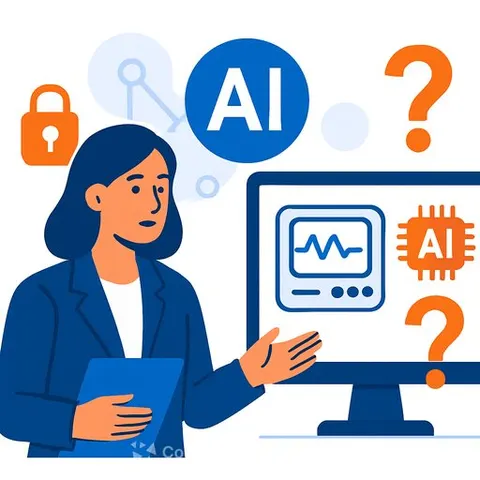
Healthcare leaders face a growing challenge: identifying and securing the multiple AI applications embedded in medical devices, from sensors to smartphones, according to Anne Snowdon, chief scientific research officer at HIMSS. The proliferation of AI-powered tools across clinical environments complicates governance, risk management, and operational oversight.
"It's very difficult to find and secure the AI applications that are already installed across a health system," Snowdon said during a July 2026 HIMSS TV interview. The devices range from bedside monitors to wearable sensors, each potentially running AI software that may not be visible to IT or clinical engineering teams.
The hidden inventory problem
Many medical devices now ship with embedded AI capabilities that perform tasks like predictive analytics, image recognition, or anomaly detection. However, these functions are often buried in firmware or vendor-specific modules, making them hard to inventory. A single hospital might have hundreds of such devices, each with its own update cycle, data flow, and security profile.
Without a clear inventory, health systems cannot adequately assess the risk these applications introduce. Patient data might flow through algorithms that are not vetted for bias, accuracy, or regulatory compliance. The challenge also extends to smartphones and tablets used by clinicians, which can run AI-driven clinical decision support apps that bypass standard IT procurement.
Governance and strategic planning gaps
Snowdon's remarks highlight a disconnect between the rapid adoption of AI at the device level and the slower pace of governance. Many organizations lack formal policies for managing AI across the device lifecycle. This gap is especially critical for healthcare executives responsible for AI for Executives & Strategy and long-term planning.
The operational burden falls on biomedical engineering, IT, and cybersecurity teams that often work in silos. A unified approach would require cross-departmental collaboration and a clear understanding of where AI is running, what data it accesses, and how it makes decisions that affect patient care.
Why this matters for healthcare professionals
For clinical and operational leaders, the inability to track and secure AI applications in medical devices introduces material risks: patient safety threats, regulatory exposure, and data breaches. The work demands not just technical tools but a strategic framework that integrates AI for Healthcare governance into existing technology management processes. Professionals who build the skills to audit and govern these hidden AI systems will be better positioned to protect their organizations and patients.