
AI news ·
Hong Kong Students Embrace AI’s Influence on Education Amid Record Stress Over Future Paths
A survey shows 91% of Hong Kong high school seniors recognize AI’s influence on education, with 20% interested in AI-related university programs. Over half report high exam stress amid career uncertainties.
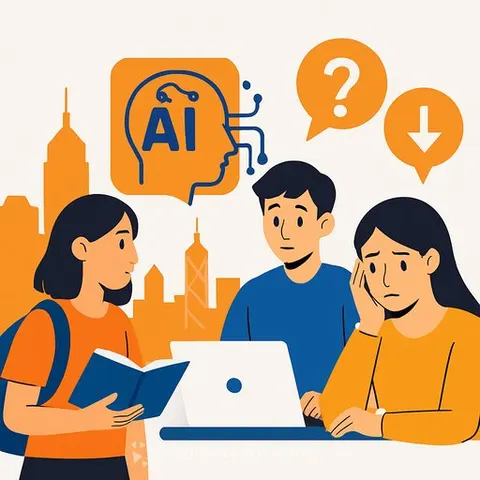
Survey Reveals Hong Kong High School Seniors’ Awareness of AI Impact on Education
A recent survey by the Hong Kong Federation of Youth Groups (HKFYG) shows that a vast majority of Hong Kong’s high school seniors recognize the growing influence of artificial intelligence (AI) on their education and future careers. About 91 percent of candidates for the Hong Kong Diploma of Secondary Education Examination (DSE) are aware of the increasing number of AI-related interdisciplinary programs offered by universities, with nearly 20 percent interested in applying to these programs.
The HKFYG surveyed 1,456 students between May and June, including 490 current DSE candidates and 966 Secondary 5 students, using online questionnaires to assess their educational planning and views on AI.
Growing Interest in AI-Related Higher Education
Andy Chan Ying-kit, supervisor at HKFYG, highlighted that Hong Kong’s universities introduced 14 interdisciplinary AI programs this year in response to shifts in the job market and AI development. With more than 90 percent of prospective college students aware of this trend, around one-fifth plan to apply for AI-focused degrees.
Chan advises students to develop interdisciplinary thinking and combine AI tools with their chosen fields to stay competitive. This approach aligns with the growing demand for skills that blend domain knowledge with AI capabilities.
AI’s Role in Future Studies and Careers
The survey found that 94.1 percent of fifth- and sixth-grade students believe AI will significantly affect their future studies and career paths. Over half expressed a desire to integrate AI technology into their professional interests.
Among the DSE candidates, 59 percent aim to pursue a bachelor’s degree after graduation. Meanwhile, 14 percent are considering overseas higher education, and 19 percent are interested in studying in Mainland China.
Rising Stress Levels Among DSE Candidates
Stress related to exam results is a growing concern. Over half of the surveyed candidates rated their stress between 7 and 10 on a 10-point scale, marking a record high over the past six years. Nearly half of the candidates described planning for further education and career as “extremely challenging,” the highest in three years.
Chan attributes the increase in stress to the economic slowdown, a shrinking job market, and other pressures. He encourages students to prepare backup plans in case their results are not as expected.
Student Perspectives and Support Resources
DSE candidate Or Man-ching shared her worries about balancing personal interests with career prospects, especially given Hong Kong’s declining fertility rate affecting her desired career as a kindergarten teacher. She emphasized that students should follow their interests and that exam setbacks do not define their future success.
Since September 1, HKFYG’s hotline has received over 8,400 calls from students and parents seeking support for exam stress, uncertain career directions, and parental concerns. To assist, the organization published a DSE Result Release Guide featuring updated information on AI-related programs.
Practical Advice for Educators
- Encourage students to explore interdisciplinary programs that combine AI with their fields of interest.
- Promote the use of AI tools to enhance learning and future career readiness.
- Recognize the increased stress students face and provide resources or referrals for mental health support.
- Help students develop backup plans and flexibility in their educational and career paths.
For educators interested in AI education resources and courses, platforms like Complete AI Training offer a variety of up-to-date programs to support skill development in this area.