
AI news ·
How to wake up from our numb acceptance of a future shaped by AI
A father of 20 years says he regrets having children after hearing that AI could kill all humans within a decade. Experts warn that numbness to AI risks-from job loss to extinction-is itself becoming a preventable threat.
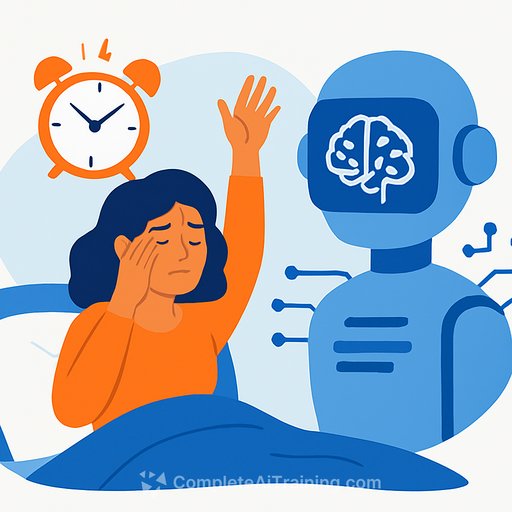
A father of 20 years recently told me he wished he had never had children. The reason was not personal, financial, or medical. It was AI. Specifically, the news that week that artificial intelligence could "kill all humans" within the next decade.
The conversation moved on quickly, the way conversations about existential threats now tend to do. But the moment stayed with me. The polycrisis we face - job displacement, climate strain from data center energy use, and now extinction-level warnings - has become ambient, like pollution. Each particle carries its own doomsday scenario, and the only way to function in this atmosphere is to be numb to it.
The shape of the shadow
This numbness now refracts through every stage of life. Middle-aged parents question whether bringing children into the world was fair. Young people cannot choose a university degree or vocation because they do not know which professions will be obsolete in a few years. Older people find themselves grateful they will not be around to see it all unravel.
There are ways out of this nihilism, but none of them will be provided by tech. The first step is to wake up. If someone broke into your house and tried to murder you, you would fight back. Yet we greet the news that AI could cause human extinction with glazed indifference.
No one actually asked for AI. And even if extinction is averted, the technology is already embedding itself in workplaces and emotional lives. GPT may be the largest provider of mental health services in the United States. It is robbing us of the capacity for critical thinking and threatening economic and social stability. This is, currently, a preventable threat.
Why we stay numb
The numbness has roots. Nearly 20 years of smartphones and social media have shortened attention spans and, through individualized algorithms, diminished our capacity for organization and collective action. The political power of tech companies means governments feel powerless or have been captured by big tech. And the tide of this progress - the "Last Invention" - feels inevitable, making resistance seem as futile as Luddites storming factories.
For professionals working in Generative AI and LLM fields, this numbness can be especially acute. You see the technology up close, understand its capabilities, and may feel caught between building a career and questioning the trajectory.
Returning to first principles
The next solution, after waking up, is to return to first principles. What are the ingredients for human flourishing? Once we can articulate that, it becomes a rope that can guide us back to where we should be.
Human flourishing is not having a machine do your critical thinking for you. It is engaging in the pleasure and the pain of working things out for yourself. Flourishing is human-to-human relationships where we care for and nurture each other - not talking to an LLM for 18 hours a day about personal problems. Flourishing is having a direct relationship with the natural world, not the world through a screen.
These are things worth fighting for. There is a place for technology in our world. But when we start hearing that it could destroy our world, we should wake up, shake off that numb feeling, and start fighting back. For those interested in the human side of this equation, Self-Improvement resources can help rebuild the critical thinking muscles that AI threatens to atrophy.
Why this matters for developers and IT professionals
You are the people building, deploying, and maintaining these systems. That position carries a responsibility the numbness tries to erase. When you hear predictions about AI's risks, you have the technical literacy to evaluate them seriously rather than dismiss them as hype. You also have the practical power to raise concerns inside your organizations, push for safety measures, and make career choices that align with human flourishing rather than against it. The fight back starts with people who understand the technology well enough to see both its promise and its peril.