
AI news ·
HR technology adoption fails without trust and process redesign, leaders say
Canadian HR staff spend 57-70% of time on admin tasks despite self-service investments. A 1Password case shows adoption hinges on process redesign and manager behavior, not just new tools.
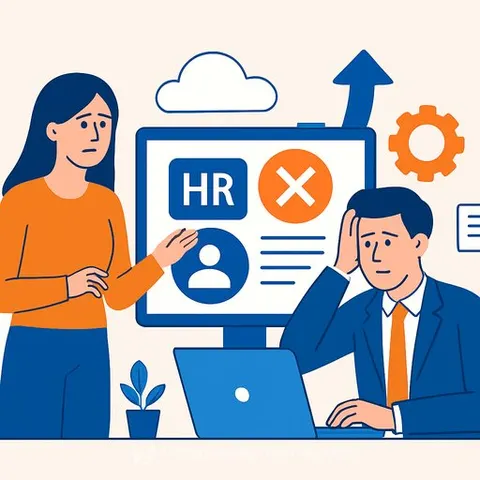
HR professionals in Canada still spend 57 to 70 per cent of their time on administrative tasks, despite years of investment in self-service technology, according to data from Deloitte, ServiceNow, and HR software provider Folk. This gap between tool spending and actual usage underscores a problem that HR leaders say has more to do with behaviour and trust than with the software itself.
The stakes for fixing this are high. As organizations scale and AI tools promise to offload routine work, real adoption depends on rethinking how processes and culture work before rolling out a new system.
Parvathi Subramanyam, Senior Director of Total Rewards at 1Password, a fully remote Canadian cybersecurity company, has watched this dynamic play out firsthand. Her organization grew from roughly 650 employees to more than 1,500 in under five years. Yet even with a new ticketing system in place, many employees and managers continue to message HR directly as if the company were still a fraction of its size.
"Some of the behaviors that we found not just from employees but actually from managers is that they tend to use HR as they would when the company was 400 people," Subramanyam said. She said the HR function had to actively educate managers and leaders - more so than employees - to help them submit requests through the system.
Design for behaviour, not just function
Subramanyam said organizations often treat self-service as an add-on rather than a redesign. "You don't just slap on a band-aid of a self-serve tool - that's just going to add on to the bureaucracy," she said. "You need to remap the process to make sure that it's the most efficient way possible."
The logic is simple: if messaging an HR colleague on Slack takes seconds while a portal ticket requires navigating a separate system, most employees will take the easier route. "You need to make it as easy as possible so that it becomes their natural behaviour as an employee population," Subramanyam said.
She is candid about the tension between efficiency and maintaining the human touch. "I think people just tend to default because we have really prided ourselves in our white-glove HR," she said. "It's finding that balance between providing the white-glove service to our employees and not taking that away completely, because that's one of our values as a company - putting people first."
For HR managers considering how to integrate these tools into their own workflows, the lesson is clear: process and culture must shift alongside technology. Training resources like AI for HR Managers can help professionals plan for that redesign before deploying a chatbot or portal.
Guardrails, training, and the AI question
Simon Blanchette, an adjunct lecturer at McGill University whose research covers AI adoption in organizations, said the most consistent mistake he observes is deploying technology before governance and training structures are in place. "It's about purposeful planning," he said. "What's the AI for? What kind of information are employees expected to use the AI for? And for what kind of information are they expecting to actually go and see their boss or their colleagues?"
Subramanyam echoed this. Rolling out an AI chatbot requires thorough testing of the underlying data. "It's not hallucinating, it's not giving our employees wrong information - we need to set the guardrails and the parameters to make sure that it's doing its job very well," she said.
"The human in the loop is only as good as how well-trained the humans are," Blanchette said. "If an employee was harmed because of an AI decision, there has to be recourse. AI can never be the final voice or the final decision-maker."
Broader context on AI adoption for HR roles can be found in resources like AI for Human Resources, which addresses the trust and training challenges raised in the article.
Self-service for information, not leadership replacement
Blanchette also cautioned against framing AI deployment as a way to reduce leadership engagement. "Implementing AI isn't a way for leaders to delegate their responsibilities," he said. "It might create more resources for the employees, but leaders need to still be leading in that change - to be there to support employees, create trust, and be there to actually also hear concerns."
The trust dimension carries particular weight in Canada. According to the Ipsos AI Monitor 2026, Canada led 32 countries in nervousness about AI, with 67 per cent of respondents expressing concern, 17 points above the global average.
Why this matters for HR professionals
For HR roles, the takeaway is specific: investing in technology without also redesigning the process around it will fail. AI may help HR become more efficient, but AI cannot replace the human judgment and trust that underpin how employees interact with their workplace. As Blanchette put it: "I think we want to still have a human focus and a human-centred future."