
AI news ·
Hyundai Engineering files patents for AI-based leak detection system
Hyundai Engineering filed two patents for an AI leak detection system that distinguishes real water leaks from condensation using IoT sensors and edge AI. The system aims to prevent unplanned downtime at data centers and industrial facilities where even small leaks can be costly.
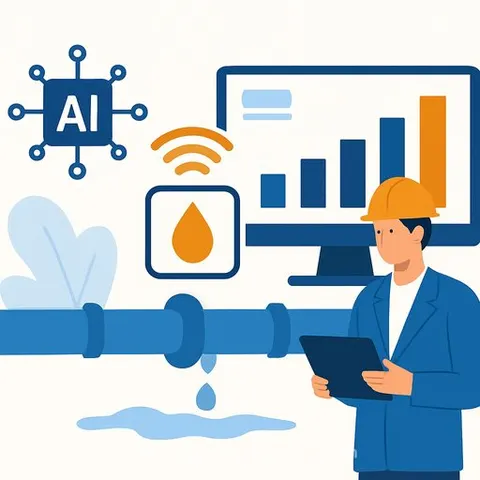
Hyundai Engineering has filed two patents for an AI-based leak detection system that identifies water leaks before they happen, developed with smart control technology firm LJ System. The move targets data centers and industrial facilities where unplanned downtime from water damage can halt operations and erode competitive standing.
The system moves beyond conventional leak sensors that only trigger when water touches them. Instead, it continuously monitors pressure, flow rate, temperature, and humidity through IoT sensors. AI models learn normal operating patterns and flag anomalies early - before a leak develops into an incident.
Cutting false alarms by distinguishing condensation from leaks
A persistent headache in facility management is the false alarm. Standard sensors cannot tell the difference between harmless condensation and an actual pipe leak, leading to unnecessary shutdowns. Hyundai Engineering's system addresses this directly. If humidity rises but pressure and flow readings stay stable, the AI classifies the event as condensation and suppresses the alert.
This distinction matters financially. Every false alarm that triggers a data center shutdown or halts a production line carries a cost, often a steep one. Reducing those interruptions through better classification keeps operations running and maintenance teams focused on real threats.
Edge AI architecture removes communication delays
The system runs on edge AI, processing data locally on the hardware rather than sending it to a central server. This design eliminates the latency that comes with cloud-based processing. In an emergency where seconds count - a burst cooling line, a failed valve - the system can respond in real time without waiting for a round trip to a remote data center.
Deployment does not require ripping out existing infrastructure. The company said sensors can be added to both new and existing buildings and integrated with current equipment. Prototyping, field data collection, and algorithm refinement are ongoing, with full-scale commercialization planned after validation is complete.
Beyond leak detection: a platform for smart operations
Hyundai Engineering intends to expand the technology into energy optimization and predictive equipment maintenance. The goal is an integrated AI solution for smart building and plant operations - one that spans from design through ongoing facility management.
"Uninterrupted operation of advanced industrial infrastructure, including data centers, is directly tied to a company's core competitiveness," a Hyundai Engineering spokesperson said. "We will continue to strengthen our engineering capabilities in the global industrial infrastructure market by integrating AI across all stages, from design to operations."
For operations professionals, the patent filings signal a shift in how industrial facilities approach leak prevention. Rather than reacting to sensor triggers, the industry is moving toward AI for Operations that predicts failures using multiple data streams. This aligns with the broader push toward predictive maintenance, where the cost of downtime justifies investment in systems that catch problems before they cascade. Managers evaluating smart building technologies can explore the AI Learning Path for Operations Managers to build the skills needed to assess and deploy these systems.
Why this matters for operations teams
Leak detection might seem like a narrow problem, but in data centers and continuous-process industries, water is a single point of failure. A small leak in the wrong place can take down servers, damage inventory, or stop production. Hyundai Engineering's approach - combining IoT data streams with edge AI that distinguishes real threats from noise - points to where industrial monitoring is headed. Operations leaders should watch how the validation and commercialization phases unfold, because the underlying architecture applies to far more than water. The same logic works for vibration, thermal, and electrical anomalies across any critical infrastructure.