
AI news ·
Imperial Oil Integrates AI and Robotics to Boost Oilsands Efficiency and Security
Imperial Oil uses robots, drones, and AI to boost efficiency and cut costs in oilsands operations. AI also improves decision-making and automates routine tasks, freeing staff for complex work.
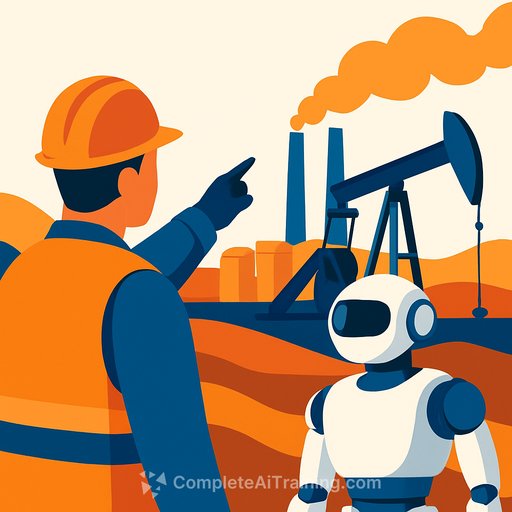
Imperial Oil Integrates Advanced Technology into Oilsands Operations
At Imperial Oil's oilsands sites in northeastern Alberta, traditional equipment like haul trucks, shovels, and pumps share the workspace with robots, drones, and now generative AI technologies. This blend of machinery and digital tools is reshaping operational efficiency.
Cheryl Gomez-Smith, senior executive overseeing production, highlighted that since starting their digital initiatives in 2018, Imperial Oil has gained $700 million in value as of last year. They expect this figure to reach $1.2 billion by 2027. The company maintains an internal team focused on technology adoption and benefits from the expertise of ExxonMobil Corp., its majority U.S. owner.
Robots and AI in the Field
Imperial has deployed self-driving haul trucks at the Kearl oilsands mine and uses Spot, a four-legged robot from Boston Dynamics, at the Cold Lake site. Spot handles routine inspections and maintenance, performing up to 70% of some operator rounds. This frees operators and maintenance staff for higher-value tasks. Imperial currently operates two Spots on site, with two more arriving soon.
The company is also advancing its use of generative AI. At Cold Lake, real-time data interactions through AI enable better operational decisions. Remote-piloted drones assist with maintenance, soon to be enhanced with AI capabilities, while AI-powered sensors help automate pumpjack speeds to improve efficiency.
Industry Perspective on AI Adoption
Shannon Wilson from IBM Canada points out that the oil and gas sector has long used automation, but AI is now taking these efforts further. AI improves productivity by quickly processing large volumes of data, aids in monitoring operations, and enhances maintenance planning to reduce downtime.
While larger companies like Imperial can invest in in-house technology teams, smaller firms often rely on commercial AI solutions from service providers. Wilson emphasizes AI as a tool to complement human intelligence, especially in routine and repeatable processes where it can add the most value.
Other Energy Companies Embracing AI
Canadian Natural Resources Ltd. uses AI tools internationally to monitor greenhouse gas emissions, identifying production anomalies that cause emission fluctuations in real time. Similarly, Suncor Energy employs autonomous trucks and has started integrating AI into its dispatch system. AI manages straightforward tasks such as assigning trucks to dump stations and directing refuelling, while human dispatchers oversee operations continuously.
Cybersecurity Challenges in Energy
The increased use of AI also brings cybersecurity risks. The 2025 IBM X-Force Threat Index reports that the energy sector accounted for 10% of cyberattacks in 2024. Energy infrastructure is a prime target for disruption due to its global importance.
Tyler Williams, EY Canada's cybersecurity leader for industrials and energy, warns that AI-enabled attacks can now be launched autonomously within seconds, causing significant damage that previously required extensive resources. He stresses that companies must deploy equally advanced technology to defend themselves.
Williams notes that while the sector is alert and investing in cybersecurity, companies often develop their own frameworks and controls independently. Industry standards are being developed, but many organizations still face the challenge of securing AI technologies effectively.
Summary
- Imperial Oil's integration of AI and robotics is boosting operational efficiency and financial performance.
- Robots like Spot and AI-driven sensors automate routine tasks, freeing human resources for complex work.
- AI enhances decision-making with real-time data insights, improving maintenance and productivity.
- Other major energy companies also leverage AI for emissions monitoring and operational automation.
- Cybersecurity remains a significant concern as AI both advances operations and introduces new threats.
Operations professionals looking to expand their AI knowledge can explore relevant training options at Complete AI Training to stay ahead in this evolving landscape.