
AI news ·
Kaopiz and QuantumTX announce agreement to co-develop AI and IoT healthcare solutions for Asia's ageing population
Kaopiz and QuantumTX signed an agreement to co-develop AI healthcare solutions. Kaopiz will deploy its 1,000-person engineering team to build remote monitoring platforms.
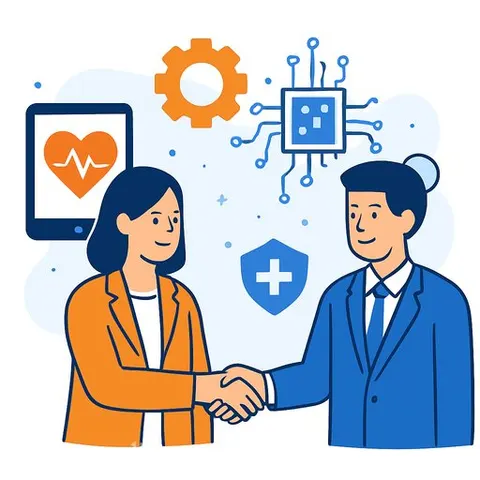
Vietnam-based software developer Kaopiz Holdings and Singapore-based health technology firm QuantumTX signed a Memorandum of Understanding on June 15, 2026, to co-develop AI and IoT healthcare solutions. The partnership aims to build predictive health and remote monitoring platforms targeting the ageing populations of both countries.
Technology roles and integration
Kaopiz will deploy its 1,000-person engineering team to research, design, and maintain software for QuantumTX's medical devices. This work involves embedding machine learning, cloud computing, and data analytics directly into the existing hardware ecosystem. Developers will focus on building systems that deliver predictive health insights and remote patient monitoring at scale. Professionals working in AI for IT & Development will see this as a direct application of integrating algorithmic models with physical IoT sensor data.
Clinical technology foundation
QuantumTX contributes its proprietary MitoCharge technology to the collaboration. This system is designed to activate muscle mitochondria and deliver the physiological benefits of exercise without physical stress. The hardware targets older adults requiring rehabilitation and preventive care. Kaopiz's software layer will translate raw device data into personalized guidance, creating a practical framework for AI for Healthcare applications.
Regional market expansion
Both companies plan to co-promote these combined solutions across Vietnam, Singapore, and broader international markets. They will also participate jointly in regional healthcare technology conferences and exhibitions. This commercial collaboration translates existing government-level bilateral commitments into active technology development. The initiative addresses shared demographic challenges through applied engineering rather than theoretical research.
Why this matters for IT and development professionals
This partnership highlights a growing demand for software engineers who can connect raw IoT sensor data with clinical utility. Developers building medical technology must prioritize data privacy, low-latency cloud processing, and predictive analytics accuracy. Building these systems requires understanding how machine learning models interact with regulated medical hardware in real-world environments.