
AI news ·
Kazakhstan promotes regional digital cooperation at first UN global dialogue on AI governance
Kazakhstan aims to become an AI-native nation within three years. It proposed an Asia-Pacific Digital Solutions Center in Almaty for regional cooperation.
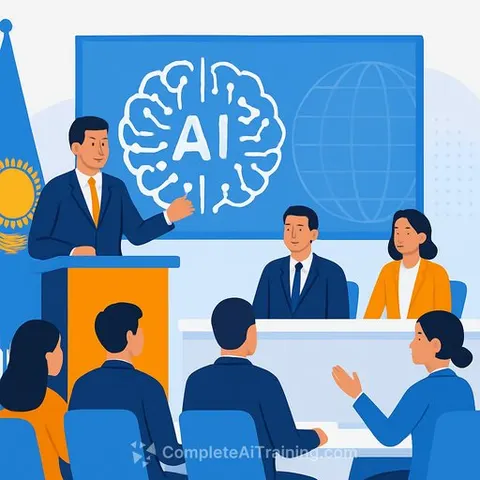
At the first UN Global Dialogue on AI Governance in Geneva on July 6-7, Kazakhstan's Deputy Prime Minister and Minister of Artificial Intelligence and Digital Development Zhaslan Madiyev outlined plans for an AI-native nation and called for stronger regional cooperation through a new Asia-Pacific Digital Solutions Center in Almaty. The event, held alongside the AI for Good Global Summit, took place as UN Secretary-General António Guterres warned that the current generation "may be the last able to define the terms of coexistence between humanity and machines."
Asia-Pacific Digital Solutions Center
Madiyev highlighted Kazakhstan's partnership with the United Nations Economic and Social Commission for Asia and the Pacific (ESCAP), which recently adopted a resolution by consensus to establish the center in Almaty. He invited member states to send national experts to work at the facility. "We believe the center will become a practical platform for testing and scaling new digital solutions across the region," Madiyev said. "Together with the UN Regional Centre for the Sustainable Development Goals for Central Asia and Afghanistan in Almaty, these platforms will strengthen regional cooperation and support the implementation of the 2030 Agenda for Sustainable Development."
Kazakhstan's AI-Native Ambition
The dialogue carries direct significance for Kazakhstan's goal to become a fully digital nation within three years under the Digital Kazakhstan-2029 strategy. Madiyev said the plan shifts the country from advanced e-government to an AI-native nation, with a readiness to share experience, launch joint pilot projects, and develop interoperable approaches to AI governance. On the sidelines of the event, he met with UN Secretary-General António Guterres to discuss further collaboration. Kazakhstan's public sector AI push aligns with broader government modernization themes found in resources like AI for Government.
Why this matters for IT and development professionals
The new Almaty center signals a regional hub for testing and deploying digital solutions, which could open collaboration points for engineers and architects working on cross-border AI interoperability. Kazakhstan's commitment to becoming an AI-native nation within three years points to a fast-moving market where infrastructure, data governance, and scalable AI services will be in demand. For developers and IT leaders, understanding the evolving global AI governance frameworks discussed at the UN dialogue is increasingly critical for building systems that comply with multiple regulatory models - a topic explored in the AI Learning Path for Policy Makers. The dialogue's emphasis on practical pilot projects suggests near-term opportunities for technology teams to test real-world implementations in a controlled, internationally supported environment.