
AI news ·
LG CNS joins Nvidia and Meta in global AI materials alliance
LG CNS joined the 48-member AI Materials Foundry to deliver AI platforms for domestic firms. It screens 300 trillion molecules, cutting discovery from years to six months.
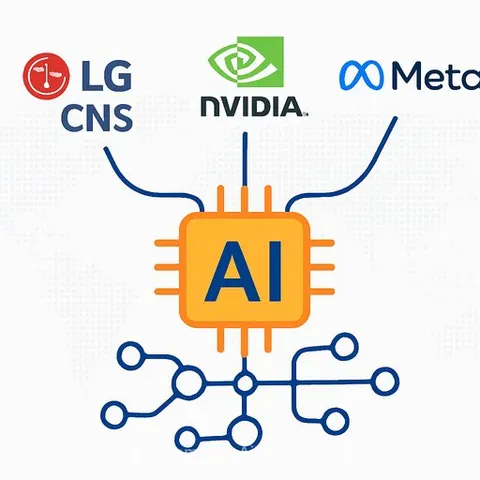
LG CNS has joined the AI Materials Foundry, a global cooperative of more than 48 companies and research institutes - including Nvidia, Meta, AMD, Samsung Electronics, Hyundai Motor Group, and Applied Materials - that combines AI and materials science to accelerate next-generation material development. The South Korean IT services firm announced its selection as a founding member on the 27th and will act as a platform delivery partner for domestic semiconductor, chemical, and energy companies.
The alliance addresses a core bottleneck in industrial R&D: developing new materials in semiconductors, clean energy, and advanced manufacturing often takes years of trial and error. AI Materials Foundry connects data, research facilities, computing power, and AI into a single platform to shorten that timeline.
How the AGENTIC AI platform works
At the center of the collaboration is CuspAI, a British startup that built an AGENTIC AI platform to design and explore new materials. Researchers input desired material properties, and the system generates and validates candidate materials using a database of experimental results. Finnish chemical company Chemira used the platform to explore 300 trillion molecular structures and identified 20 new material candidates. What previously required several years was reduced to six months.
CuspAI said, "In the future, industrial development will depend on how quickly we develop new materials that do not yet exist." The AI Materials Foundry aims to connect global data and research capabilities to make that possible across participating organizations.
LG CNS's delivery partnership
As a platform delivery partner, LG CNS will support material data processing, platform construction, operation, and result interpretation for Korean manufacturers. Companies can conduct new material research without building separate AI infrastructure or hiring specialized AI experts. The effort is part of LG CNS's broader AI transformation (AX) initiative, which targets practical business results in the materials sector.
Jang Min-yong, head of LG CNS's chemical and battery business, said, "Reducing costs and time in developing new materials is directly related to corporate competitiveness. We will act as AX partners so that domestic manufacturing and material companies can achieve practical business results by utilizing the world's best AI-based research ecosystem."
Why this matters for science and research
For researchers in materials science and chemistry, the Chemira case demonstrates how AI-driven high-throughput virtual screening can massively compress discovery cycles. Instead of synthesizing and testing thousands of candidate molecules, teams can focus validation efforts on a small set of AI-prioritized compounds. Keeping pace with such platforms - and the skills to interface with them - will increasingly determine R&D productivity in industrial settings. Professionals looking to strengthen their AI capabilities can access resources such as the AI for Science & Research training pathways to stay current with these methods.