
AI news ·
Logistics executives bet on AI to boost workers, not replace them
Nearly 70% of logistics executives now rank autonomous supply chains as a top investment priority. But the bigger challenge is training workers to operate alongside AI, not replacing them.
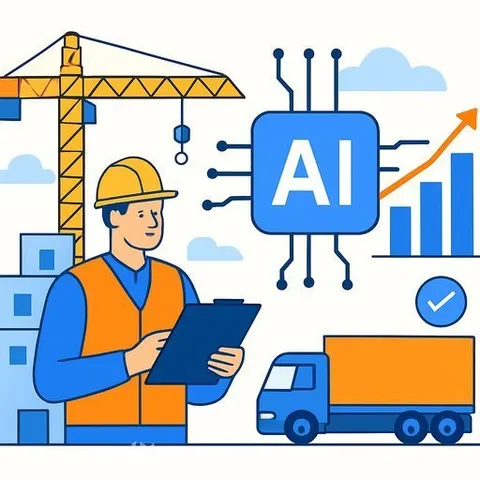
AI Will Amplify Human Capability, Not Replace Workers in Logistics
Artificial intelligence is transforming supply chain operations, but its real value lies in helping workers do their jobs better rather than eliminating them. Nearly 70% of logistics executives now rank autonomous supply chains as a top investment priority, yet the industry faces a persistent challenge: finding and training workers who can operate alongside AI-enabled systems.
This pattern has precedent. When Walmart mandated RFID tags on pallets and cases in 2005, the technology promised to revolutionize inventory tracking. High costs, inconsistent reads, and infrastructure problems stalled adoption for years. But the technology improved. By 2010, Walmart re-embraced RFID for apparel and item-level tracking, where it significantly cut out-of-stocks and boosted inventory accuracy. Today, the mandate remains active and expanding.
AI feels different-it's advancing faster and affecting daily workflows almost immediately. But the comparison holds: the technologies that endure are those that amplify human capability rather than replace it.
The Warehouse of the Future Needs Different Skills
Logistics operations now face geopolitical disruption, labor shortages, and pressure for faster response times. In this environment, automation becomes an efficiency tool, not a workforce elimination strategy.
In the warehouse of the future, employees will spend less time on repetitive physical tasks. Instead, they'll supervise robotics, interpret operational data, and coordinate autonomous workflows. The real differentiator for organizations will be their ability to develop a workforce capable of managing and scaling these systems.
This shift requires reskilling and retention strategies. The central challenge remains unchanged from the RFID era: finding workers who can successfully operate alongside new technology.
What Managers Should Focus On
For supply chain managers, the takeaway is clear. AI and automation work best when treated as workforce amplification tools. This means investing in training programs that help existing staff adapt to new roles.
Accenture research shows that logistics executives increasingly view automation as a way to help people work smarter, not to eliminate jobs. Organizations that adopt this mindset-treating AI as a capability enhancer-will have an advantage in a volatile market.
For managers responsible for implementing these systems, the focus should be on how AI reduces drudgery and creates space for higher-value work. AI for Management means understanding how your team can supervise and optimize automated processes, not how to replace them.
Technologies that truly endure are those that steadily improve execution and weave themselves into operational fabric. AI is likely to follow that pattern-if organizations invest in the people who will manage it.