
AI news ·
Machine learning model identifies high-risk drivers before they get behind the wheel, researchers say
Researchers at the University of Sharjah built a machine learning model that flags high-risk drivers before they get on the road. It combines personality tests, heart rate and gaze tracking, and simulator performance to predict accident likelihood.
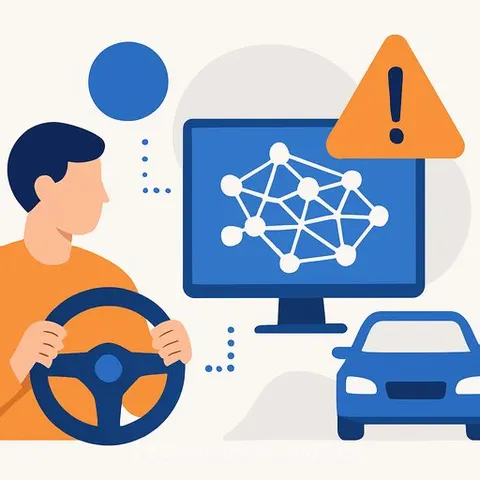
Machine Learning Model Predicts High-Risk Drivers Before They Take the Road
Researchers at the University of Sharjah have developed a machine learning system that identifies drivers likely to have accidents before they get behind the wheel. The model combines psychological profiling, physiological monitoring, and simulated driving performance to classify drivers as low-risk or high-risk.
Traditional driver screening in taxi and commercial transport sectors relies on experience and background checks. These methods often fail to predict who will pose a higher risk on the road, according to the researchers.
How the System Works
Study participants completed a questionnaire measuring personality traits like sensation-seeking and conscientiousness. They then drove in a realistic simulator replicating urban traffic conditions in Dubai, which handles over 3.5 million vehicles daily.
During the simulation, researchers recorded heart rate, blink rate, and gaze deviation. Machine learning models analyzed this combined data to classify drivers based on accidents and traffic violations during the test.
Dr. Malek Masmoudi, lead author and associate professor of industrial engineering, said the analysis identified four key predictors: gaze distraction, sensation-seeking, conscientiousness, and gender.
What the Data Shows
Drivers whose gaze frequently strayed from the road were significantly more likely to have simulated accidents. Individuals scoring high in sensation-seeking-drawn to excitement and risk-exhibited unsafe driving behaviors.
Disciplined and responsible individuals drove more cautiously. These measurable personality traits and attention habits, when analyzed together, allowed the system to predict risk with high accuracy.
Beyond Hiring Decisions
Taxi companies and fleet operators can use the framework to make more informed hiring decisions. The system also functions as a training tool, helping drivers recognize their risk patterns and improve attention and self-regulation.
Drivers identified as higher-risk can receive specialized coaching in attention control, stress management, and safe decision-making.
Dr. Masmoudi emphasized that the preventive approach differs from current practice. "The safest accident is the one that never happens. That's why safety must start before a driver ever touches the steering wheel," he said.
Implementation and Limitations
Prof. Imad Alsyouf, a co-author, stressed that artificial intelligence should strengthen human judgment, not replace it. The goal is to move from intuition-based recruitment to evidence-based safety decisions.
Companies could incorporate a short simulator-based assessment combined with psychological screening and physiological monitoring into their hiring process.
The framework shifts safety management from reactive-responding after incidents-to preventive, identifying and addressing risks before deployment.
The research was published in Engineering Applications of Artificial Intelligence in 2025.
For professionals working in research and data science, understanding how machine learning models integrate psychological and physiological data can inform similar predictive systems in other safety-critical fields. Explore AI Research Courses to develop skills in building classification models and working with multimodal datasets.