
AI news ·
Malta study finds 81% of artists using AI without formal training
80% of Maltese artists use AI in their work, yet 82% have never received formal training in it. The new Culture Venture report warns 81% of surveyed artists urgently want stronger regulation to protect creators.
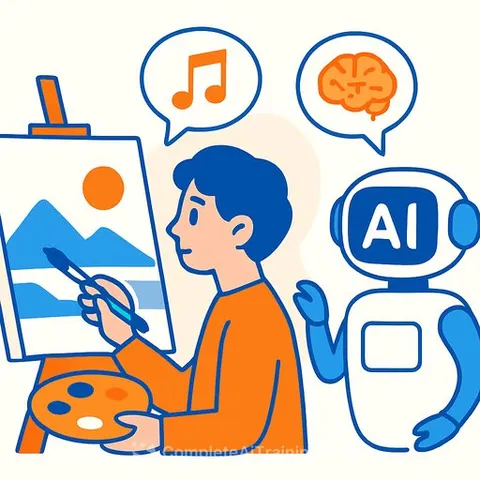
Four out of five artists in Malta are using artificial intelligence in their work, yet most have had no formal training in the technology. That's the central finding of a new report from Culture Venture, "Artificial Intelligence and Artistic Practice in Malta: Trends, Impact and Future Directions," which surveyed artists and cultural practitioners with support from Arts Council Malta.
The report paints a picture of an arts sector that has adopted AI quickly and largely on its own terms. While artists report real benefits - nearly 90% say AI improves their speed, and 80% see gains in administration - most have learned through trial and error. 82% have never received structured training in AI.
Artists are using AI mainly as a practical assistant, not a creative replacement. Generative AI tools are the most widely adopted, followed by automation for repetitive tasks. Common uses include research, brainstorming, concept generation, writing, and design visualization, with artists applying their own judgement to refine what the technology produces.
The report frames this as a mentorship gap. The technology could function as a useful creative colleague, but without structured support, artists don't yet trust what it offers.
Innovation meets anxiety
Artists in Malta are embracing AI even as they worry about what it means for their careers and the culture they work in. More than three-quarters of respondents said they are concerned about the ethical use of AI, and 81% said stronger regulation is urgently needed to protect creators.
Nearly four in ten artists said they are highly concerned their work could be used without consent to train commercial AI systems. Yet 55% said they had not personally encountered a verifiable violation of their work. And 64% said they do not consider AI-generated outputs to have the same authorship value as human-created work.
"Artists are not shying away from AI. They are embracing it, experimenting with it and incorporating it into their creative practices," said Valerie Visanich, who co-authored the study with Toni Attard and Graziella Vella. "Yet this enthusiasm is accompanied by growing concerns about copyright, artistic integrity, cultural identity and, ultimately, the sustainability of creative livelihoods."
There's also a generational divide. Younger practitioners, especially those aged 25 to 34, are significantly more likely to integrate AI into their professional practice.
Cultural identity and the homogenisation risk
The concern goes beyond economic impact. Almost two-thirds of artists believe AI risks homogenising cultural expression, and over half worry that Maltese language and local artistic traditions could become marginalised within global AI systems trained predominantly on English-language and international datasets.
For most in the sector, preparing for lagging cultural policy-AI requires preparation for how these technologies will affect local identity-creating spaces in the digital age. As Visanich put it: "Artists stated they are primarily using AI as a practical assistant rather than a replacement for creativity."
Preparing for what's next
With the majority of Maltese artists already using AI and the European Commission's Eurobarometer 562 showing Malta recording higher levels of AI engagement than the EU average, the question is shifting from whether the sector will be affected to how it will be shaped. In Malta, 76% of respondents expressed concern about the impact of generative AI on artists' employment and earnings, compared with 73% across the European Union.
The report recommends a National AI and Culture Strategy, warning that AI is no longer simply a technological issue but a cultural, economic, and social one. It also calls for an artist-centred AI literacy programme covering ethics, copyright, licensing, prompt design, environmental sustainability, and responsible integration - and by potentially supporting Maltese-language AI resources to safeguard cultural diversity.
The report ultimately rejects the binary narrative of AI as either a miracle or a threat, and argues the future will depend on how the technology is governed. Visanich's team calls for clear rules on copyright and compensation for artists whose work trains AI systems.
Training like AI for Creatives can offer practical pathways for artists working through these ethical and technical questions. For those specifically interested in AI-generated art, learning generative art techniques and reviewing relevant courses and certifications can help online practice with the technology in an informed way.
Why this matters for creatives
What creatives and institutions understand about AI will determine how the future of the practice unfolds - but it will be people, not technology, that decide whether it's innovative. The report says the future of artistic practice will depend on how technology is governed rather than on the tech itself, which is an accountable dem. For creatives, the findings are a reason to ask for clearer guidance and support in their own workpaces. That, for example, means interrogating how data is being used, whether your creative practice is fair use to train AI systems they feel uncomfortable with, and asking what structures are in place to support your artistic independence. Disclosing the use of AI is one obvious step toward that honesty.
Right now, artists have a distinct advantage in the conversation: they're already using the tools. They just haven't gathered the room yet to shape the systems that will define the culture they produce.