
AI news ·
Managerial tasks rule as employees and AI become indistinguishable
Pandemic remote work and AI have made task-focused management essential. Organizing, assigning, and verifying work now matter more than inspiration.
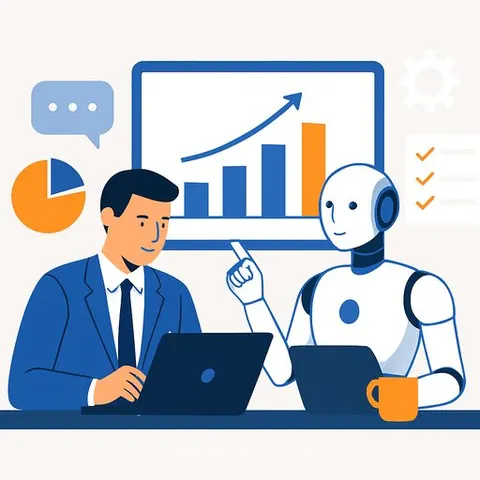
Remember those leadership seminars you attended? Forget them. The pandemic's normalization of remote work set off a chain of events that now renders the old leadership-vs.-management debate obsolete. With AI indistinguishable from human workers in distributed teams, managers are discovering that task-oriented oversight, not inspirational leadership, is what gets things done.
The leadership-management debate gets flipped
The business-pundit class once thundered that C-suite occupants must be leaders, not "pathetic, sniveling managers." They found Peter Drucker's formulation clever: "Leadership is doing the right things; management is doing them right." And Admiral Grace Hopper's admonition, "You manage inventories; people must be led," became a mantra. The pundits were not entirely wrong, but they were, as someone once said, insufficiently right.
COVID legitimized the virtual workforce. Before COVID, working remotely was a privileged exception. During COVID it became mandatory, as did competence in the tools that enabled it. This shift rebalanced the employee-manager relationship. With a virtualized workforce, interactions grew more transactional. It was about getting tasks done, pure and simple.
The success of that model then led managers to bemoan the loss of human contact and cultural glue. But the next phase is already here: in a fully virtualized workforce, AI for Management is no longer a niche concept when you can't tell whether a worker is carbon- or silicon-based. It's hard to demand a humanized experience when nobody human is on the other end.
The three tasks managers now must master
Leadership, it has been often argued, comprises eight tasks: setting direction, making decisions, staffing, delegating, motivating, managing team dynamics, establishing culture, and communicating. The equivalent management list, now resurgent, strips those down to three elements: organizing work, assigning tasks, and accepting the results.
That means determining what a human or virtual staff member must work on, when they must work on it, when it's due, and how each piece fits into larger workflows. Managers must be aware of workflows, not just individual tasks. One risk in the transition from humans to AIs is losing flexibility - the ability to supersede process specifications when circumstances demand improvisation.
Redefining the workforce
The blurring of human and AI workers will force a serious rethinking of human resources. For now, organizations can limp along with AIs and OIs ("organic intelligences") managed on separate tracks. But that model will likely prove unworkable in the long term, as AI for Human Resources practitioners will be the first to confirm. An integrated organizational solution that deals with all entities that get work done will be essential to watch.
Why this matters for management
The chain of unintended consequences triggered by COVID inadvertently prepared business leaders for their transformed AI-driven role: management has returned to the forefront just as the employee-boss relationship becomes decreasingly important. If you lead a team where some members may be AI, your priority shifts from empathy and inspiration to the hard skills of organizing, assigning, and verifying work. The managers who learn to keep workflows flexible - knowing when to encourage improvisation - will be the ones who keep their organizations from painting themselves into a corner.