
AI news ·
Mark Zuckerberg criticizes Anthropic and OpenAI for centralizing artificial intelligence power
Meta CEO Mark Zuckerberg criticized two rival AI labs for restricting access, warning it centralizes power. He argued closed development abandons open innovation.
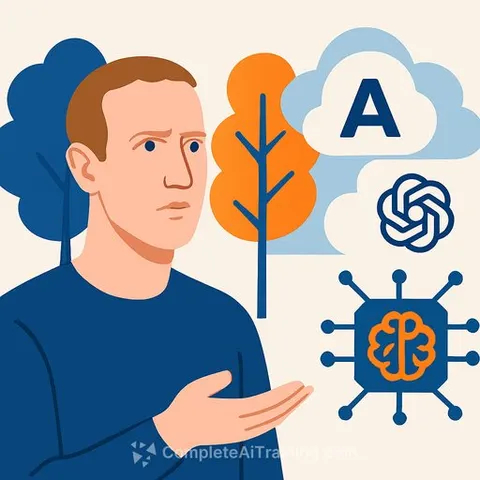
Mark Zuckerberg took aim at the closed development practices of leading artificial intelligence startups on Tuesday, warning that tightly guarding access to the technology could centralize power and narrow who benefits from AI. In a rare interview with The New York Times, the Meta chief executive argued that locking down research would abandon the open ethos that drove past American tech innovation.
He did not name Anthropic or OpenAI directly, but his criticism was aimed unmistakably at their controlled approach. "So much of the discourse from a lot of the other labs that are developing this is overwhelmingly filled with doom," Mr. Zuckerberg said. "There needs to be a voice or several voices that are bringing realism to this debate."
Zuckerberg targets restrictive development
The 42-year-old CEO suggested that if key labs continue to restrict access to their models, the industry risks stifling new businesses and cementing control among a handful of companies. His comments signal an escalation in the ongoing conflict over how the most powerful AI systems should be built and distributed.
"If the leading research labs wanted to develop A.I. technology in a tightly controlled manner - as Anthropic and OpenAI have done - it would be akin to abandoning our values," Zuckerberg said, without naming the firms directly.
A widening rift among tech leaders
The remarks deepen a debate splitting Silicon Valley. Anthropic CEO Dario Amodei and OpenAI CEO Sam Altman have both argued that some of today's leading Generative AI and LLM models are too dangerous to be shared and developed without tight oversight. They advocate for staged deployments and heavy restrictions to prevent misuse.
On the other side, Meta, Microsoft, Nvidia, and Google contend that open development fuels faster progress and broader economic opportunity. These companies push for releasing models widely - or at least less restrictively - so that developers, startups, and researchers can build on top of them without excessive gatekeeping.
Why this matters for IT & Development
The direction this conflict takes will directly shape AI for IT & Development teams. If a few firms lock down the most capable models behind proprietary APIs, organizations lose the ability to fine-tune, self-host, or customize systems for security-sensitive or industry-specific tasks. Open-weight alternatives give infrastructure and development teams more control over performance, data governance, and cost - advantages that closed ecosystems rarely match. The outcome of this debate will determine whether enterprise AI strategy is built on a handful of third-party subscriptions or on flexible, internally managed models.