
AI news ·
Marketers face AI treadmill as Bain data shows ROI gap widens and autonomy claims fall short
Marketing jobs are vanishing as companies restructure around AI, with 75% of marketers saying hiring is harder than two years ago. But those still employed often get no AI training-and the tools aren't delivering promised results.
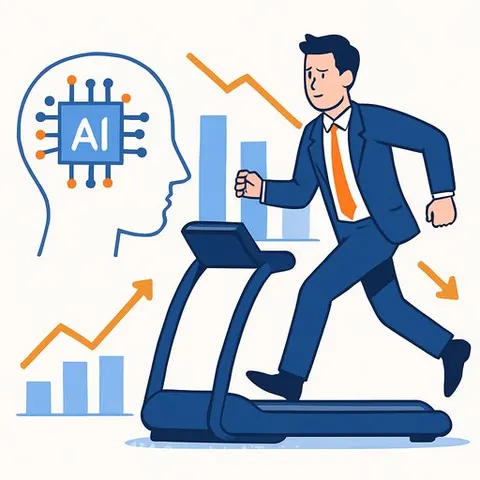
Marketing jobs are disappearing. AI isn't making the remaining ones better.
Three-quarters of marketers say finding a job is harder than it was two years ago, with job searches now taking an average of 5.2 months. Many positions have been eliminated in restructurings aimed at building AI capabilities.
For those still employed, the picture is mixed. Nearly half of marketers report that AI is reshaping their team's workflows, roles, or tasks significantly. Yet 27% of organizations offer no career development for employees expected to use AI-and workers often pay for training themselves.
The fundamental problem: companies assume AI will do the work alone. It won't.
What AI actually does in marketing
McKinsey researchers call this the "gen AI paradox"-the technology is everywhere, but absent from the bottom line. Marketing teams were early AI adopters, yet results have disappointed.
Bain & Company's latest data confirms this. Nearly 40% of companies measuring AI cost savings fell short of targets, landing below 10% despite aiming for 11% to 20%. Yet 90% plan to increase budgets again.
Only 7% of companies are running fully autonomous agents in production. Most investment cases assume full automation. Operating reality is far more human.
The top barrier to AI progress isn't technology-it's data. Companies struggling with AI cite data access and integration as their biggest obstacle. So do companies succeeding. The difference: successful companies treat it as a problem to solve, not a reason to wait.
The real work ahead
Marketing will change. Campaign management and dynamic content personalization will become AI-native. Teams will shrink.
But here's the hard question: will smaller teams do more meaningful work, or just faster grinding? That depends on what brands actually want from marketing.
Bain offers blunt advice: don't expect AI to fix broken processes. "AI doesn't fix workflow debt; it locks it in, speeds it up, and makes it vastly more expensive to unwind." Before approving any AI program, ask: "If we were designing this process from scratch today, what would it look like?"
Only then should the technology conversation begin.
What marketers need to know
The jobs that survive will demand human skills AI can't replace: strategic thinking, discernment, storytelling, listening to customers, understanding market trends. These are expensive to develop and easy to skip.
Many talented creators lost work to AI-generated content and copyright violations in training data. Some of the best marketing work comes from identifying and nurturing that external creative talent-not replacing it with internal brainstorming tools.
If you're still in a marketing role, your value lies in what you bring beyond what generative AI can produce. That's not a comfortable position. It's also not negotiable.
Learn how marketing managers are adapting to AI, or explore broader AI applications in marketing.