
AI news ·
Marketers push back against 'good enough' culture as AI erodes brand standards
Brand marketers warn AI-generated ads are eroding quality, with one beauty exec saying teams spend 80% of time on AI output but still need a final 10% human fix just to make work usable.
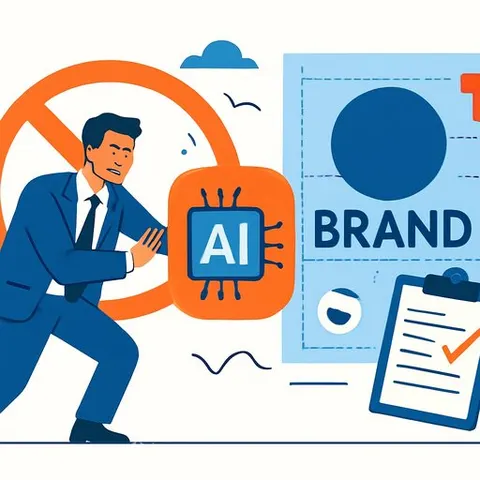
As the advertising industry's fall conference season peaks in September 2026, brand-side marketers are sounding alarms about declining creative standards. The culprit: an over-reliance on AI-generated content that prioritizes speed over quality, threatening brand equity for premium companies and sparking urgent conversations about change management across the sector.
The 'good enough' trap
At the AI Marketing Strategies event on September 24, co-hosted by Digiday and sister titles Glossy and Modern Retail, marketers gathered under the Chatham House Rule to discuss what one participant called "a growing acceptance of 'good enough - go.'" The phrase captured a frustration shared across the room: agencies and internal teams are letting AI-driven workflows degrade the quality control that premium brands depend on.
"The quality control is so bad," said a representative from a premium beauty brand. "Establishing brand standards into [AI-driven ad] platforms is challenging all of us." The same participant described a 10/80/10 formula for working with AI-generated creative: 10% of time spent on upfront prompting, 80% on the AI's output, and a final 10% of human effort required to make the work usable.
Multiple marketers said their agency partners show less motivation to protect brand standards, often assigning junior employees to oversee automated platforms. For beauty and luxury verticals, where visual precision is central to credibility, the risk is acute. One attendee reported seeing creative executions where "our logo isn't right," forcing them to demand human oversight before campaigns could run.
Change management takes center stage
In a separate closed-door session, participants stressed that leadership must handle automation rollouts with greater attention to what one source called "the human element." A small agency chief framed the tension bluntly: projects that once took weeks can now be completed in hours. "You have to ask yourself what value do your employees have on top of that? People are going to feel very threatened," they said.
Isabel Perry, global EVP of strategy at DEPT, argued that marketers need to rethink measurement for an internet where bot and agent-driven traffic rivals human audiences. "We are drowning in measurement," she said. "Instead of just measuring numbers, we need to measure gaps." By identifying gaps in the consumer journey - which parts remain human versus those handled by AI - brands can reallocate budgets toward what actually moves the needle, rather than chasing generic industry metrics.
Rajiv Ragu, VP of digital at Thorne, addressed product discovery in what he called a "zero-click world." He warned that legacy content libraries require active curation to remain visible as AI reshapes search behavior. "You need to see what content is still being picked up," Ragu said, noting that updating authorship and content itself is an investment brands cannot afford to skip.
Why this matters for marketing and creative leaders
The shift toward AI-first workflows is not slowing down, but the backlash at industry events signals that brands are hitting a ceiling on what automation alone can deliver. For marketing directors and CMOs, the immediate task is establishing enforceable quality standards within AI-driven platforms - and auditing whether agency partners are actually upholding them. The emerging consensus is that AI output functions best as a rough draft, not a finished product. Leaders who treat it otherwise risk eroding the brand equity they were hired to protect. For those building teams, the challenge is equally clear: define the human value that sits on top of speed, then train and hire against that gap. Programs like AI Marketing Leadership Courses and AI for Marketing Directors Courses are designed to help senior practitioners build exactly these standards and strategic frameworks.